OpenCode Go + oh-my-openagent: The Complete Guide to SOTA Model Routing Without Hitting Limits!
AI · · 8 min read · medium.com ↗
Title: OpenCode Go + oh-my-openagent: The Complete Guide to SOTA Model Routing Without Hitting Limits!
URL Source: http://medium.com/@jatinkrmalik/opencode-go-oh-my-openagent-the-complete-guide-to-sota-model-routing-without-hitting-limits-49fdc8cb3417
Published Time: 2026-05-04T07:34:30Z
Markdown Content:

9 min read
3 days ago
OpenCode Go gives you access to 14 state-of-the-art open-source models like Kimi K2.6, DeepSeek V4 Pro, GLM-5.1, Qwen3.6 Plus, and more, for $10/month.
Most subscribers route everything through a single model and burn through their limits in hours. Here’s how to use them correctly.
What You Get with OpenCode Go
For $10/month, you get access to:
Press enter or click to view image in full size
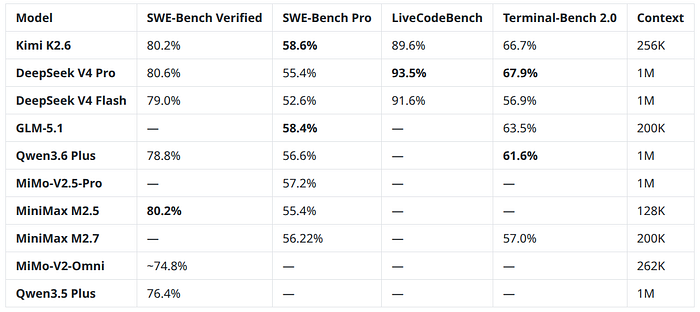
Reference frontier models (for context):
- Claude Opus 4.7: 87.6% SWE-Verified, 64.3% SWE-Pro
- GPT-5.4: 57.7% SWE-Pro
- Gemini 3.1 Pro: 54.2% SWE-Pro
On SWE-Bench Pro (the hardest real-world engineering benchmark), Kimi K2.6 at 58.6% and GLM-5.1 at 58.4% are within 6 points of Opus 4.7 (64.3%). DeepSeek V4 Pro at 55.4% beats Gemini 3.1 Pro (54.2%).
The trade-off: You’re getting ~80–90% of frontier quality at ~10–20x lower cost. For most production work, that’s the right trade-off.
The Problem: Most People Use One Model for Everything
Press enter or click to view image in full size
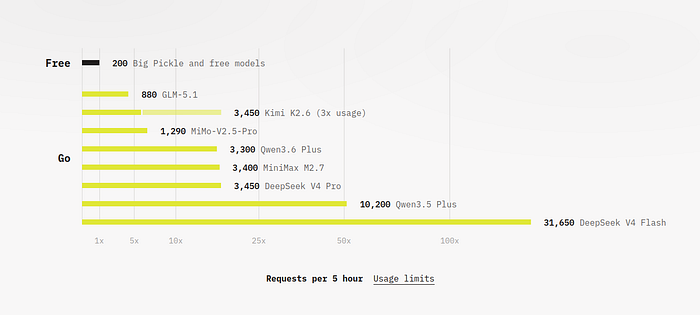
FYI, OpenCode Go limits are dollar-based, not token-based:
- 5-hour window: $12 of usage
- Weekly: $30
- Monthly: $60
A single agentic coding session burns 50–200 requests (one per tool call, file edit, shell command). If you route your main orchestrator through Kimi K2.6 for everything, you’ll hit the 1,150 request/5hr limit in 2–3 heavy sessions.
The fix: tiered routing with fallback_models chains. Use the right model for the right complexity.
Step 1: Install OpenCode + Oh My Open Agent
Prerequisites
- OpenCode 1.0.133+ (older versions have a config bug)
- Git, Node.js or Bun
- macOS, Linux, or WSL
Install OpenCode
curl -fsSL https://opencode.ai/install | bash
opencode --version
Install Oh My Open Agent
bunx oh-my-opencode install For non-interactive setup (LLM agents, CI):
bunx oh-my-opencode install --no-tui \
--opencode-go=yes \
--opencode-zen=yes \
--claude=no \
--openai=no \
--gemini=no \
--copilot=no
Verify Installation
opencode --version
bunx oh-my-opencode doctor
opencode models
opencode auth login
Step 2: Understand the Agents
Oh My Open Agent provides 11 built-in agents, each designed for a specific task. The key insight: each agent has a different optimal model based on its job.
Orchestrators & Planners
Press enter or click to view image in full size

Deep Workers
Press enter or click to view image in full size

Utility & Search Agents
Press enter or click to view image in full size

Step 3: The Tiered Model Architecture
**The core principle:**match model capability to task complexity.
Press enter or click to view image in full size
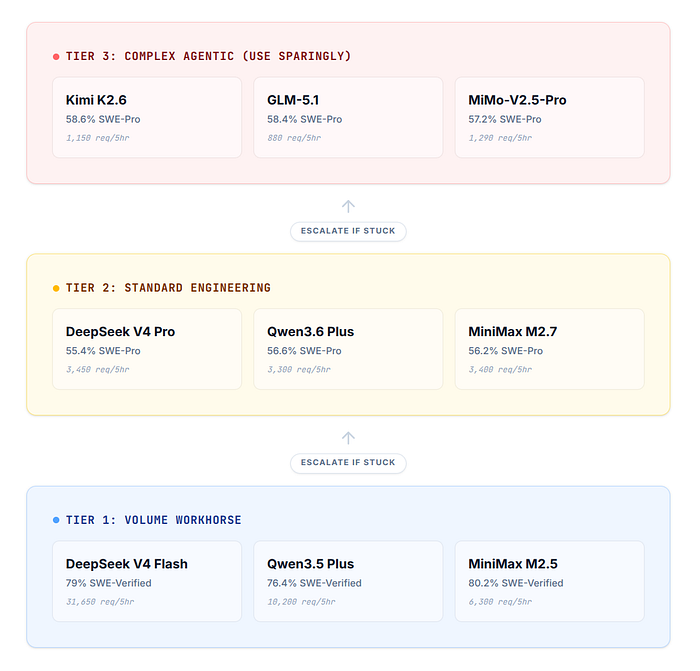
Don’t burn your best model on trivial tasks!
Tier 1 // Volume Workhorse (Never Rate-Limited)
Models: DeepSeek V4 Flash, Qwen3.5 Plus, MiniMax M2.5
Use for:
- Code completion and autocomplete
- Simple bug fixes (1–2 files)
- Code review and PR feedback
- Explore / Librarian searches
- Quick tasks and Sisyphus-Junior executions
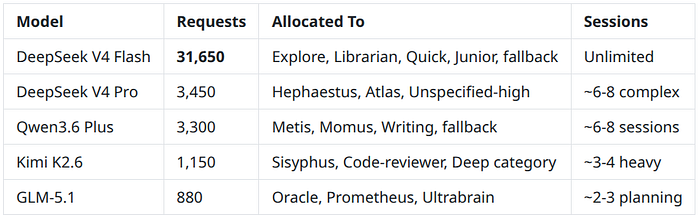
Why: DeepSeek V4 Flash gives you 31,650 requests per 5 hours, you’ll never exhaust it. At 79% SWE-Verified, it’s good enough for 80% of coding tasks.
Tier 2 // Standard Engineering (Balanced)
Models: DeepSeek V4 Pro, Qwen3.6 Plus, MiniMax M2.7
Use for:
- Feature implementation (3–5 files)
- Terminal-heavy automation
- Multi-step debugging
- Standard agentic workflows
Why: 3,300–3,450 requests per 5 hours. V4 Pro leads LiveCodeBench at 93.5%. Qwen3.6 Plus leads Terminal-Bench at 61.6%.
Tier 3 // Complex Agentic (Elite)
Models: Kimi K2.6, GLM-5.1, MiMo-V2.5-Pro
Use for:
- Multi-file refactoring (10+ files)
- Long-horizon autonomous runs (4+ hours)
- Architecture decisions
- 300-agent swarm coordination
Why: These score 57–59% on SWE-Bench Pro, the hardest real-world benchmark. But limits are tight (880–1,290 req/5hr). Use deliberately.
Tier 4 // Specialized Capabilities
Models: MiMo-V2-Omni (multimodal), GLM-5.1 (long-horizon reasoning)
Get Jatin K Malik’s stories in your inbox
Join Medium for free to get updates from this writer.
Remember me for faster sign in
Use for:
- Screenshot-to-code (MiMo-V2-Omni)
- 8-hour autonomous engineering runs (GLM-5.1)
- Spec-writing and architectural planning (GLM-5.1)
Step 4: Configure Rate Limit Resilience
Press enter or click to view image in full size
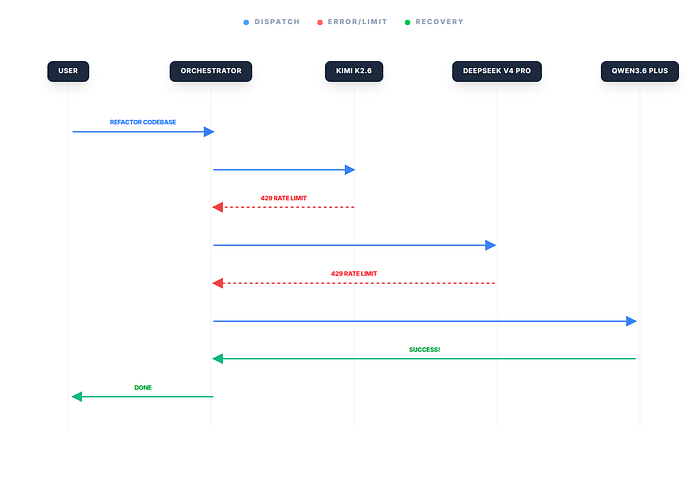
Enable model_fallback and set up fallback chains so rate limits don't break your workflow:
{
"model_fallback": true,
"runtime_fallback": {
"enabled": true,
"retry_on_errors": [400, 429, 503, 529],
"max_fallback_attempts": 3,
"cooldown_seconds": 60,
"timeout_seconds": 30,
"notify_on_fallback": true
}
}
When a provider hits rate limits, it’s globally blacklisted for cooldown_seconds. All new sessions skip blacklisted providers until cooldown expires.
Step 5: The Complete Configuration
Save this to ~/.config/opencode/oh-my-openagent.json:
{
"$schema": "https://raw.githubusercontent.com/code-yeongyu/oh-my-openagent/dev/assets/oh-my-opencode.schema.json",
"model_fallback": true,
"runtime_fallback": {
"enabled": true,
"retry_on_errors": [400, 429, 503, 529],
"max_fallback_attempts": 3,
"cooldown_seconds": 60,
"timeout_seconds": 30,
"notify_on_fallback": true
},
"agents": {
"sisyphus": {
"model": "opencode-go/kimi-k2.6",
"fallback_models": [
"opencode-go/deepseek-v4-pro",
"opencode-go/qwen3.6-plus"
],
"ultrawork": {
"model": "opencode-go/kimi-k2.6",
"variant": "max"
}
},
"hephaestus": {
"model": "opencode-go/deepseek-v4-pro",
"fallback_models": [
"opencode-go/deepseek-v4-flash",
"opencode-go/kimi-k2.6"
],
"prompt_append": "Explore thoroughly, then implement. Prefer small, testable changes."
},
"oracle": {
"model": "opencode-go/glm-5.1",
"fallback_models": [
"opencode-go/kimi-k2.6",
"opencode-go/deepseek-v4-pro"
]
},
"librarian": {
"model": "opencode-go/deepseek-v4-flash",
"fallback_models": "opencode-go/qwen3.5-plus"
},
"explore": {
"model": "opencode-go/deepseek-v4-flash"
},
"multimodal-looker": {
"model": "opencode-go/mimo-v2-omni",
"fallback_models": "opencode-go/qwen3.6-plus"
},
"prometheus": {
"model": "opencode-go/glm-5.1",
"fallback_models": [
"opencode-go/qwen3.6-plus",
"opencode-go/deepseek-v4-pro"
],
"prompt_append": "Always interview first. Validate scope before planning."
},
"metis": {
"model": "opencode-go/qwen3.6-plus",
"fallback_models": "opencode-go/deepseek-v4-pro"
},
"momus": {
"model": "opencode-go/qwen3.6-plus",
"fallback_models": "opencode-go/kimi-k2.6"
},
"atlas": {
"model": "opencode-go/deepseek-v4-pro",
"fallback_models": "opencode-go/deepseek-v4-flash"
},
"code-reviewer": {
"model": "opencode-go/kimi-k2.6",
"fallback_models": "opencode-go/deepseek-v4-pro"
},
"sisyphus-junior": {
"model": "opencode-go/deepseek-v4-flash"
}
},
"categories": {
"visual-engineering": {
"model": "opencode-go/mimo-v2-omni",
"fallback_models": "opencode-go/qwen3.6-plus"
},
"ultrabrain": {
"model": "opencode-go/glm-5.1",
"fallback_models": "opencode-go/kimi-k2.6"
},
"deep": {
"model": "opencode-go/kimi-k2.6",
"fallback_models": "opencode-go/deepseek-v4-pro"
},
"artistry": {
"model": "opencode-go/glm-5.1",
"fallback_models": "opencode-go/qwen3.6-plus"
},
"quick": {
"model": "opencode-go/deepseek-v4-flash"
},
"unspecified-low": {
"model": "opencode-go/deepseek-v4-flash"
},
"unspecified-high": {
"model": "opencode-go/deepseek-v4-pro",
"fallback_models": "opencode-go/kimi-k2.6"
},
"writing": {
"model": "opencode-go/qwen3.6-plus"
}
},
"background_task": {
"defaultConcurrency": 5,
"staleTimeoutMs": 180000,
"providerConcurrency": {
"opencode-go": 10
},
"modelConcurrency": {
"opencode-go/kimi-k2.6": 2,
"opencode-go/deepseek-v4-pro": 3,
"opencode-go/deepseek-v4-flash": 20,
"opencode-go/glm-5.1": 1,
"opencode-go/qwen3.6-plus": 5
}
},
"git_master": {
"include_co_authored_by": false
}
}
Configuration Breakdown
Sisyphus (Main Orchestrator)
- Primary:
opencode-go/kimi-k2.6— best agentic coder (58.6% SWE-Pro) - Fallback 1:
opencode-go/deepseek-v4-pro— when K2.6 hits limits - Fallback 2:
opencode-go/qwen3.6-plus— generous limits, good reasoning - Ultrawork mode also uses K2.6 for background parallel execution
Hephaestus (Autonomous Deep Worker)
- Primary:
opencode-go/deepseek-v4-pro— principle-driven, GPT-like - Fallback 1:
opencode-go/deepseek-v4-flash— cheap, fast - Fallback 2:
opencode-go/kimi-k2.6— if both DeepSeek exhausted
Oracle (Architecture Consultant)
- Primary:
opencode-go/glm-5.1— best reasoning among Go models, 8-hour autonomous runs - Fallback:
opencode-go/kimi-k2.6— second-best agentic performance - Note: Without Opus/GPT models, Oracle is your weakest link. GLM-5.1 at 58.4% SWE-Pro is solid but trails Opus 4.7 (64.3%).
Explore / Librarian (Search Agents)
- Both use
opencode-go/deepseek-v4-flash— 31,650 req/5hr, never rate-limited - These are speed agents. Don’t waste expensive models here!
Prometheus (Planner)
- Primary:
opencode-go/glm-5.1— spec-writing, architectural planning - Fallback:
opencode-go/qwen3.6-plus— good reasoning, generous limits - Planning consumes few requests, so tight GLM-5.1 limits (880/5hr) are acceptable
Metis / Momus (Review Agents)
- Both use
opencode-go/qwen3.6-plus— 3,300 req/5hr, analytical - Momus falls back to Kimi K2.6 for critical reviews
Code-reviewer (Quality Review)
- Primary:
opencode-go/kimi-k2.6— highest SWE-Pro among Go models (58.6%) - Fallback:
opencode-go/deepseek-v4-pro
Categories
deep: K2.6 → V4 Pro (complex research + execution)quick: V4 Flash (trivial tasks)unspecified-low: V4 Flash (moderate tasks)unspecified-high: V4 Pro → K2.6 (complex work)writing: Qwen3.6 Plus (instruction following)visual-engineehttps://github.com/code-yeongyu/oh-my-openagentring: MiMo-V2-Omni → Qwen3.6 Plus (multimodal → text fallback)ultrabrain: GLM-5.1 → K2.6 (maximum reasoning available on Go)
Step 6: Rate Limit Budgeting
Per 5-Hour Window
Press enter or click to view image in full size
Session Cost Estimates
Press enter or click to view image in full size
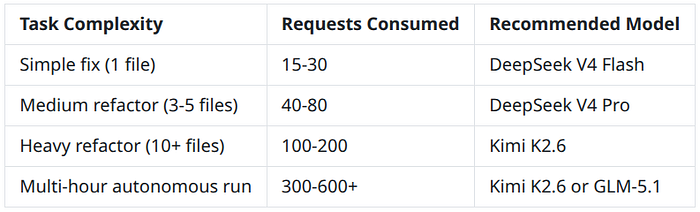
Rule of thumb: If a task will take more than 100 requests, route it through V4 Flash first. Escalate to K2.6 or V4 Pro only if V4 Flash gets stuck.
Step 7: The Quality Trade-Offs
Without Copilot or other frontier providers, you’re working with a pure OpenCode Go stack.
Here’s where you win and where you compromise:
Where You Win ✔
- Cost: Save $50–200/month for frontier API access
- LiveCodeBench: DeepSeek V4 Pro at 93.5% beats every frontier model on competitive programming
- Terminal-Bench: Qwen3.6 Plus at 61.6% beats Claude 4.5 (59.3%) on agentic terminal work
- Token efficiency: MiMo-V2.5-Pro uses 40–60% fewer tokens than Claude at comparable capability
- Rate limits: DeepSeek V4 Flash at 31K req/5hr is effectively unlimited
Where You Compromise ⁉
- SWE-Bench Verified: Your best is 80.6% (V4 Pro) vs Opus 4.7 at 87.6%. That’s a 7-point gap on real-world bug fixes.
- Oracle quality: GLM-5.1 is excellent (58.4% SWE-Pro, 8-hour runs) but not Opus 4.7. For architecture decisions on unfamiliar systems, expect ~15–20% more iterations.
- Multimodal: MiMo-V2-Omni is capable but trails Gemini 3.1 Pro on vision-heavy tasks.
V**erdict**: For 80% of coding tasks, the gap is invisible.
For the remaining 20%(complex architecture, cutting-edge security, maximum accuracy), you’ll need 1–2 extra iterations. The cost savings ($100–200/month) more than compensate.
Step 8: Validate Your Setup
bunx oh-my-opencode doctor --verbose bunx oh-my-opencode refresh-model-capabilities
cd your-project
opencode
Press enter or click to view image in full size
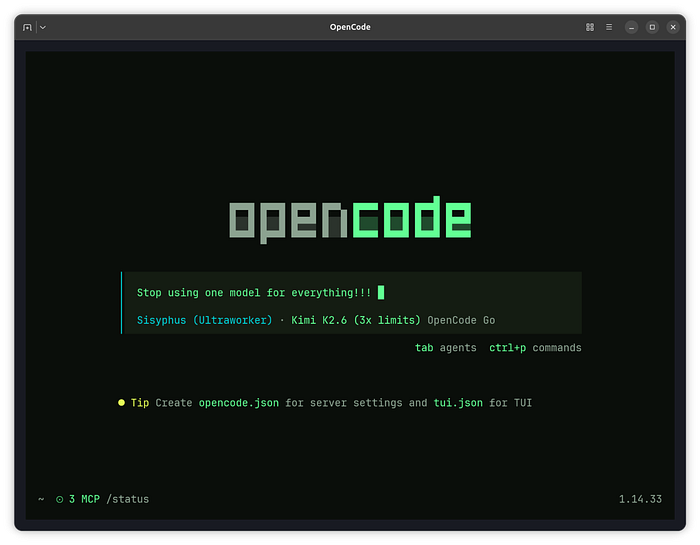
opencode + oh-my-openagent = ❤️
Key Principles
- Don’t route everything through one model. K2.6 is great but 1,150 req/5hr is tight. Use V4 Flash for volume, V4 Pro for standard work, K2.6/GLM-5.1 for the hardest tasks.
- Don’t “upgrade” utility agents. Explore and Librarian need speed, not intelligence. V4 Flash at 31K req/5hr is perfect.
- Use
fallback_modelseverywhere. Rate limits are not failures — they're signals to switch models. - Keep concurrency conservative. Start at 2–3 parallel tasks, run cleanly, then increase. The
background_task.modelConcurrencysettings above are tuned for your limits. - When K2.6 (or some other top model) has a 3x promo (as it does this week), abuse it. Route Sisyphus, Hephaestus, and Deep category through K2.6. When the promo ends, revert Hephaestus to V4 Pro primary.
- **GLM-5.1 is your Oracle substitute.**It has the tightest limits (880/5hr) but the best reasoning among Go models. Reserve it for planning, architecture, and long-horizon tasks.
- Qwen3.6 Plus is your Swiss Army knife. 3,300 req/5hr, 61.6% Terminal-Bench, good at everything. Use it for Metis, Momus, Writing, and as a universal fallback.
Resources for you to read:
- OpenCode Go Docs: https://opencode.ai/docs/go/
- Oh My Open Agent GitHub: https://github.com/code-yeongyu/oh-my-openagent
- Oh My Open Agent Docs: https://ohmyopenagent.com/en/docs
- Config Schema: https://raw.githubusercontent.com/code-yeongyu/oh-my-openagent/dev/assets/oh-my-opencode.schema.json
- Agent-Model Matching: https://github.com/code-yeongyu/oh-my-openagent/blob/dev/docs/guide/agent-model-matching.md
- Configuration Reference: https://github.com/code-yeongyu/oh-my-openagent/blob/dev/docs/reference/configuration.md