LlamaIndex Blog
AI · · 32 min read · llamaindex.ai ↗
Published Time: Sat, 23 May 2026 00:44:15 GMT
Markdown Content: Introducing ParseBench: The First Document Parsing Benchmark for AI Agents
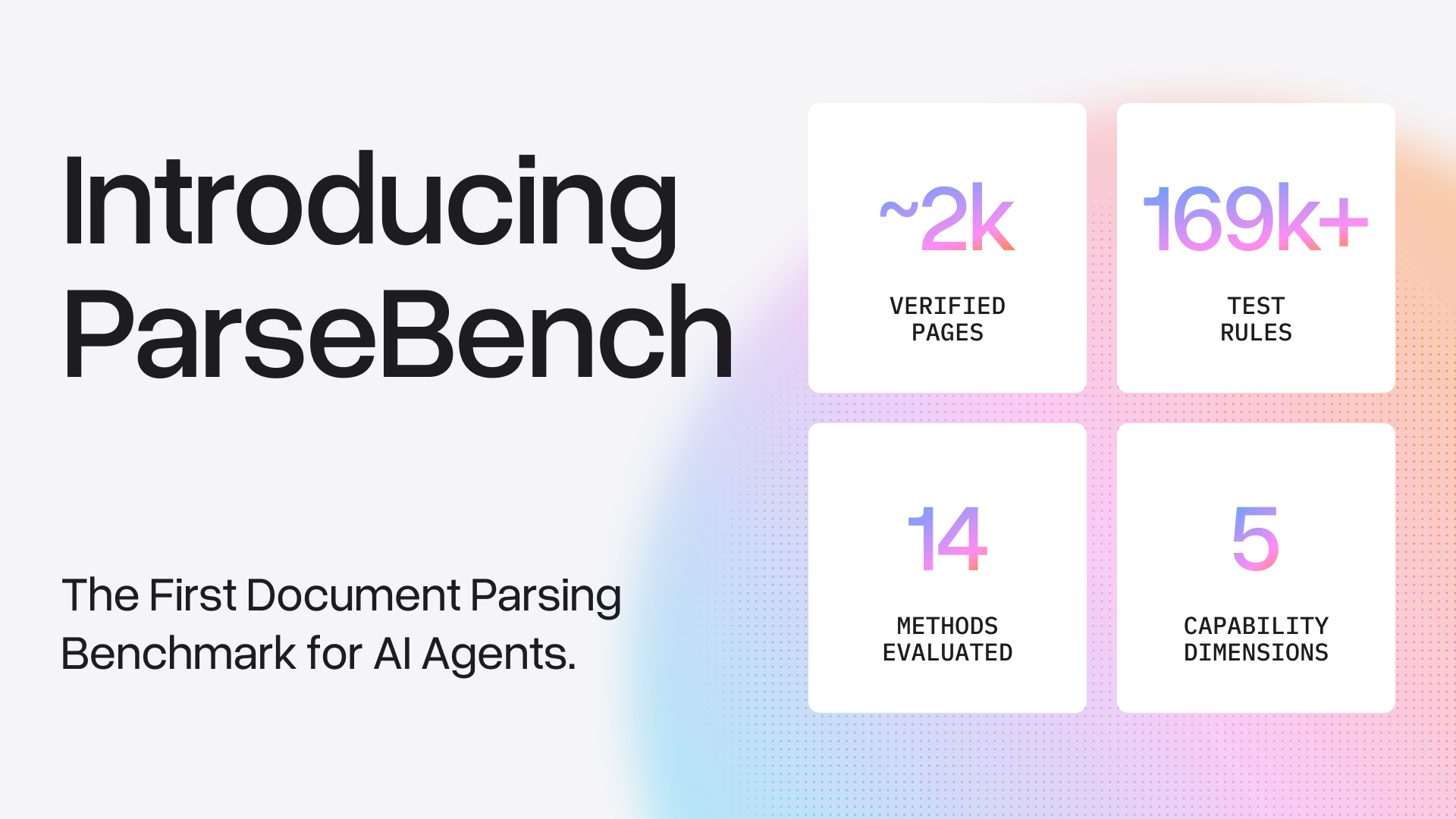
Document parsing is the foundation of every AI agent working with real-world files, yet no benchmark has measured parsing quality the way agents actually need it. ParseBench is a new open-source benchmark of ~2,000 human-verified enterprise document pages with over 167,000 test rules, evaluating parsers across five critical dimensions: tables, charts, content faithfulness, semantic formatting, and visual grounding. After testing 14 methods, LlamaParse Agentic was the only one competitive across all five dimensions, scoring 84.9% overall.
Get a weekly roundup of the latest news and insights on the world of LLMs and word on the newest features of the LlamaIndex libraries.
Register for our ParseBench webinar to learn how to evaluate the accuracy of your document ingestion pipelines. Two new open-source repos for keeping document parsing fully local, and a quick recap from our recent events at Singapore and NYC.
LlamaIndex Newsletter 2026-04-21
This week: we launched ParseBench, the first document OCR benchmark built for AI agents, with deep-dive videos on three of the five new accuracy metrics (TableRecordMatch, ChartDataPointMatch, and Content Faithfulness). Plus — LiteParse gets its official home on the site after crossing 4.3K GitHub stars, Anthropic Opus 4.7 lands in our benchmark (+42% on charts, mixed elsewhere — LlamaParse Agentic still leads at 84.9%), and we're hosting the AI Builders rooftop at NYC FinTech Week.
LlamaIndex Newsletter 2026-04-14
This week we're spotlighting ParseBench — the first open-source document OCR benchmark built for the agentic era — alongside LiteParse's explosive growth (4K+ GitHub stars in 3 weeks), a structure-aware PDF QA pipeline with LanceDB, and a new partnership with Auth0 on secure document agents. Plus: two live workshops coming up with Logan on LiteParse (April 28 - virtual) and Jerry on agentic OCR for fintech in NYC (May 13- in-person).
OCR for KYC: Why Standard Text Extraction Falls Short of Compliance Requirements
Standard OCR was built for clean typed text, not the worn passports, angled phone photos, and multilingual identity documents that real KYC intake looks like. This guide covers why standard text extraction falls short of compliance requirements, where the errors propagate, and what agentic OCR does differently to meet the accuracy threshold that AML regulations actually demand.

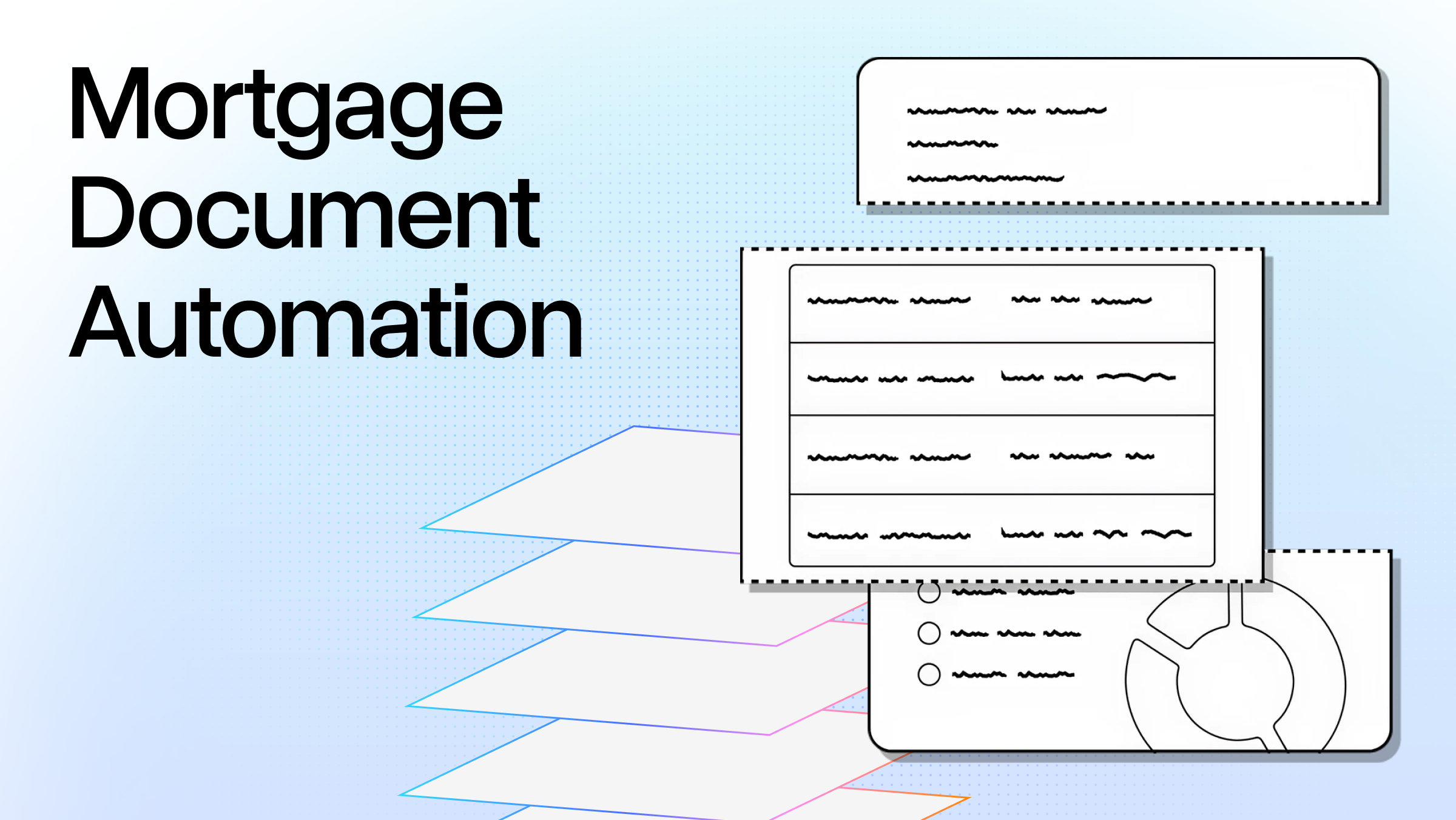
Mortgage Document Automation: Transforming Loan Processing
Mortgage lending depends on accurate document processing, but most workflows still rely on manual review or template-based systems that break down as document variability increases. This guide covers how mortgage document automation works, what a production-ready workflow actually requires, and where intelligent document processing determines whether the system holds up at scale.
Income Verification API: How to Automate Document-Based Income Checks at Scale
Income verification is straightforward for salaried employees with standard pay stubs. The hard cases are everyone else: gig workers, freelancers, contractors, and self-employed individuals whose income lives in tax returns, bank statements, and platform earnings summaries. This guide covers how income verification APIs work and where the document processing layer determines whether the whole system holds up in production.
KYC Automation: How to Replace Manual Verification with Scalable, Compliant Workflows
Manual KYC takes days, scales poorly, and produces inconsistent results under volume pressure. Automated KYC handles document extraction, identity verification, sanctions screening, and risk scoring at a fraction of the cost, with greater consistency and a complete audit trail. This guide covers how it works, what it takes to implement well, and where most implementations underestimate the document processing layer.
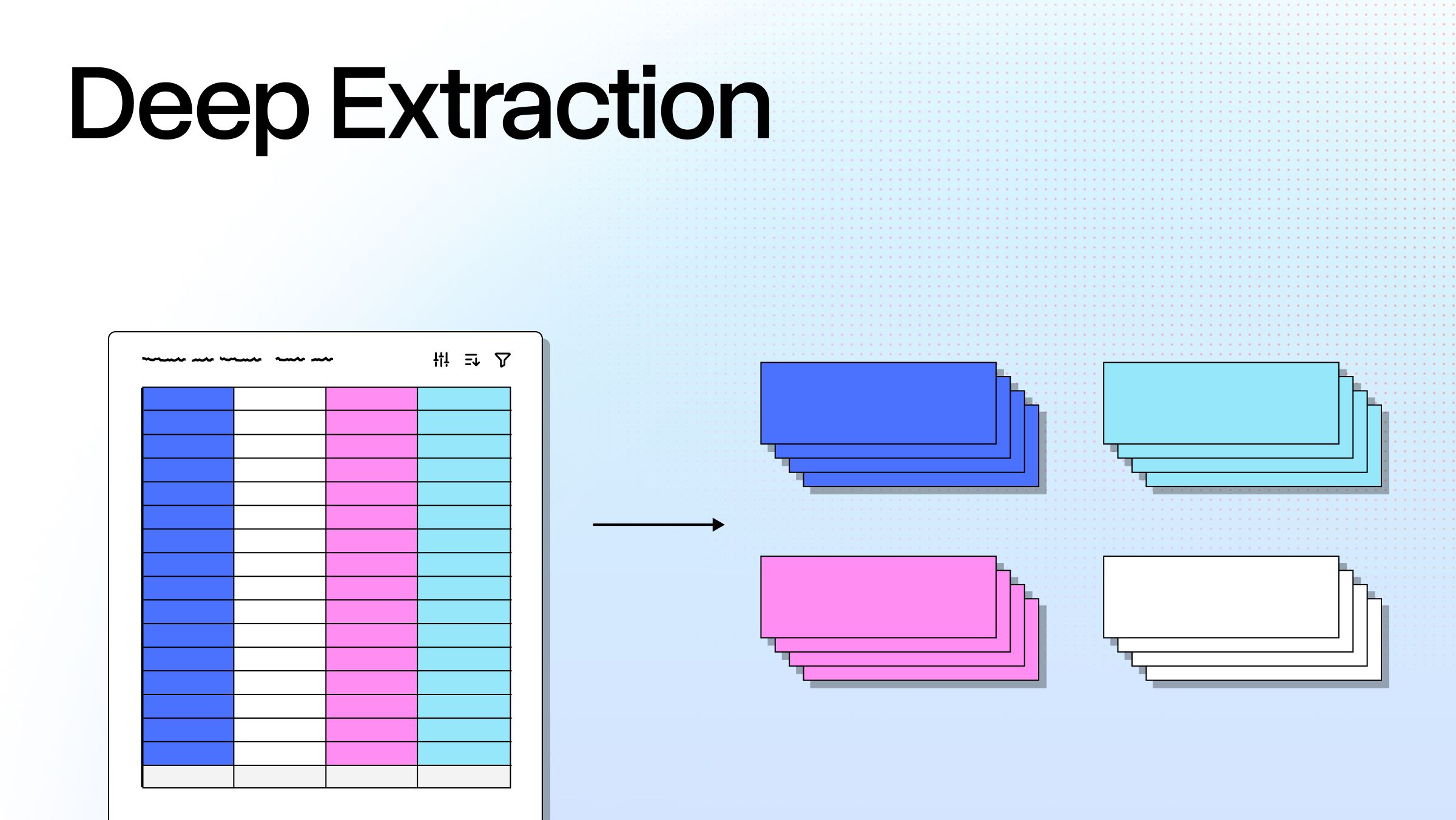
Why Single-Pass Extraction Fails and What Deep Extraction Actually Solves
Single-pass extraction has no accountability loop. It extracts once, ships whatever it produced, and has no way to flag what got dropped. This guide covers why that breaks on real-world documents, what deep extraction actually does differently, and when the architecture shift is worth it.
AI Document Classification: A Practical Guide to Automated Sorting and Tagging
Most organizations underestimate how much time gets spent before any real document processing happens, figuring out the nature of the document, where it belongs, and what should happen to it next. At scale, that sorting layer becomes a serious bottleneck. This guide covers how AI document classification eliminates it entirely, where it creates the most operational value, and what separates systems that hold up on real documents from those that only perform well on clean test sets.
OCR Accuracy Explained: What Impacts Performance and How to Improve It
OCR accuracy depends on more than just the engine. Document quality, layout complexity, and validation all impact real-world performance. This guide explains how OCR accuracy is measured and how to improve it across your pipeline.
Unstructured Data Extraction: How to Turn Documents into Structured Insights
Unstructured data extraction turns PDFs, emails, and documents into structured, queryable data. This guide breaks down how modern AI pipelines use NLP, NER, and LLMs to extract, validate, and integrate information at scale, so teams can unlock insights hidden in unstructured data.
Parsing the Unreadable: How LlamaParse Handles Legal Discovery Documents
Discovery documents are designed to be difficult. Scanned at low resolution, black and white, sometimes intentionally degraded — and lawyers are expected to search through hundreds of thousands of them. Traditional OCR breaks on exactly these documents, and anything visual gets missed entirely. This post walks through how to configure LlamaParse for a legal discovery pipeline: handling low-quality scans, surfacing image and chart content, and using custom prompts to guide parsing for predictable document patterns.
How Agentic AI Improves Document Extraction Accuracy and Automation
Traditional OCR transcribes documents — it doesn't understand them. When layouts shift or formats change, pipelines break and manual review queues pile up. Agentic document extraction treats document processing as a reasoning task, using visual grounding, spatial awareness, and self-correction to handle complex documents accurately, without templates or retraining.
Agentic Document Processing: How AI Agents Are Automating Complex Workflows
Most document automation tools don't actually understand documents—they extract text, fill in fields, and hand off to a human the moment things get complicated. Agentic document processing changes this: AI agents reason through documents, handle exceptions autonomously, and connect to downstream systems to complete workflows end-to-end. This piece breaks down how it works, where it delivers the most value, and what it takes to implement it in practice.
OCR for Tables: How to Extract Structured Data from Documents
Tables in PDFs, invoices, and scanned documents often hide critical business data behind visual layouts that standard OCR can’t reliably parse. OCR for tables converts these layouts into structured, machine-readable formats while preserving headers, row relationships, and numeric integrity. Modern solutions, like LlamaParse, combine layout analysis, structural parsing, and validation to produce production-ready JSON or CSV outputs. This enables automation, analytics, and seamless integration with enterprise workflows without manual post-processing.
Agentic OCR for Receipts: Why Traditional Pipelines Break
Receipt OCR often looks simple until real-world variability breaks traditional pipelines. Line items drift, totals get misidentified, and rule-based systems accumulate fragile fixes. This article explains why receipts are a stress test for document automation and how agentic OCR architectures preserve structure, validate financial fields, and produce reliable, structured outputs for production systems.
OCR for Images: Top AI Software for Image-to-Text Conversion
Optical Character Recognition (OCR) is a critical first step in modern AI workflows, turning images and scans into usable text. But real-world images introduce distortion, noise, and complex layouts that basic OCR often struggles with. Today’s teams need systems that preserve structure, extract reliable data, and feed automation and AI pipelines. This guide explores the top tools for image-to-text OCR and how to build a production-ready document intelligence stack.
OCR for Invoices: How to Extract Data with Accuracy and Speed
Manual invoice processing is slow, error-prone, and expensive. Modern OCR for invoices, like LlamaParse, automates data extraction from PDFs and scanned documents, handling complex layouts, tables, and vendor formats. By reducing manual entry, improving accuracy, and enabling real-time visibility, it transforms accounts payable into a faster, scalable, and more efficient workflow.
What Is Agentic OCR? The Next Evolution of Intelligent Document Automation
Most OCR systems read documents but don’t understand them. Agentic OCR adds reasoning, self-correction, and adaptive model selection to document processing workflows. The result is more reliable automation that can handle layout changes, complex documents, and new formats without extensive retraining.
OCR for Accounts Payable: Benefits, Challenges, and Best Practices
Accounts payable teams process large volumes of invoices across inconsistent vendor formats, making manual workflows slow and error-prone. OCR for accounts payable automates invoice data extraction and transforms unstructured documents into structured financial data. This guide explores the benefits, challenges, and best practices for implementing OCR-driven AP automation.
OCR for Insurance Documents: Transforming Claims Processing
Legacy OCR breaks on variable insurance documents. See how layout-aware extraction handles claims, invoices, and cross-document validation at scale.
Loan Document Automation: Why the Extraction Layer Makes or Breaks Your Pipeline
Template OCR breaks on real loan documents. See how agentic extraction handles W-2s, tax returns, and bank statements with field-level accuracy.
Passport OCR: Why the MRZ Is More Than Two Lines of Text
Most passport OCR skips MRZ checksum validation entirely. See how agentic OCR handles VIZ-MRZ cross-checks and non-Latin scripts in production.
AI-Powered Document Analysis for Financial Compliance in Fintech
Legacy OCR breaks on complex financial documents. See how LlamaParse handles KYC, AML, and loan docs with layout-aware, AI-ready extraction.
OCR in Healthcare: Automating Patient Data Extraction Without Breaking HIPAA
Learn how structured OCR extraction automates patient data from claims, lab results, and discharge summaries while staying HIPAA-compliant.

Medical Claims Processing Systems: Why Most Claim Denials Start at Document Intake
Most claim denials trace back to OCR errors at intake, not coding mistakes. See how agentic OCR fixes extraction at the source.
Register for our ParseBench webinar to learn how to evaluate the accuracy of your document ingestion pipelines. Two new open-source repos for keeping document parsing fully local, and a quick recap from our recent events at Singapore and NYC.
Building a Financial Due Diligence Agent with LiteParse
Financial analysts spend up to 70% of their time pulling numbers out of PDFs. In this post, I walk through a demo app that flips that workflow: an AI agent that ingests SEC filings, answers questions, and highlights the exact source text on the original PDF page. The whole thing is ~600 lines of Next.js code, no vector database required — just LiteParse, keyword search, and a well-instructed LLM.
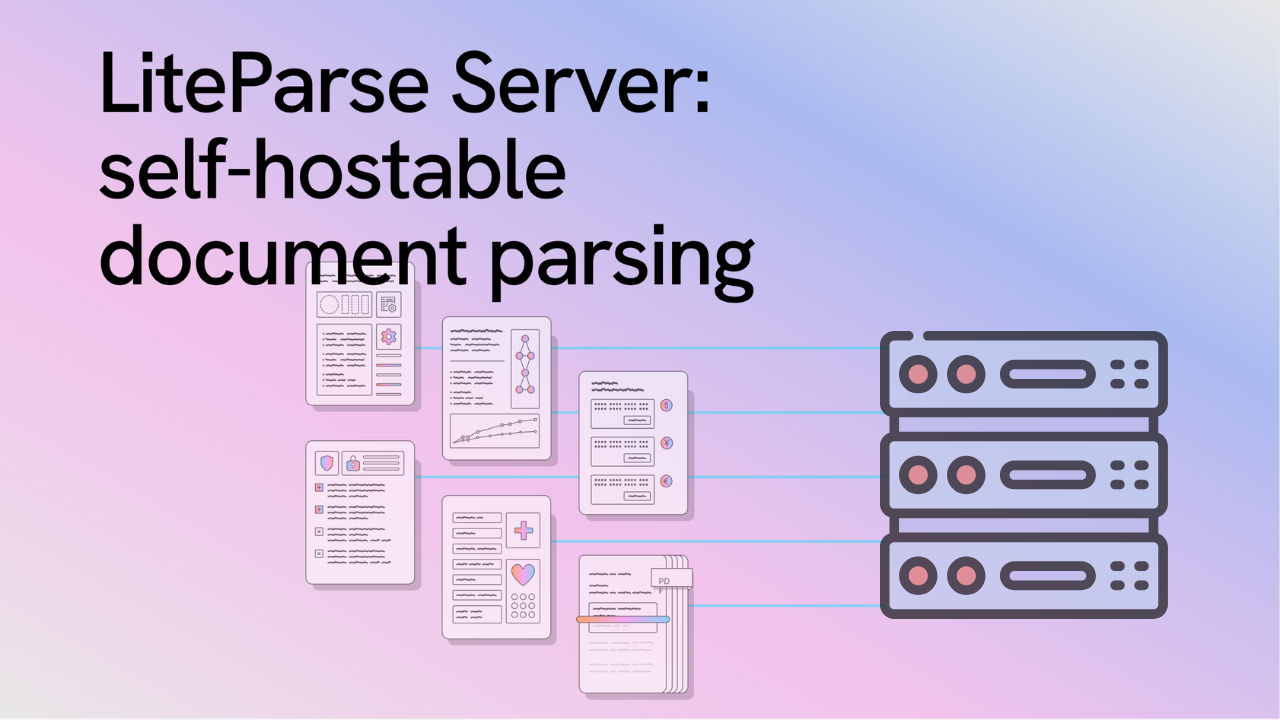
LiteParse Server: Self-Hostable Document Parsing
liteparse-server is a self-hosted HTTP backend for document parsing that sits between naive extraction tools and expensive cloud APIs. It aims to be fast, local, and accurate, preserving the spatial layout of text rather than just dumping raw content, which matters for downstream tasks like table extraction or citation grounding. It supports a wide range of formats including PDFs, Word documents, PowerPoints, spreadsheets, and images. Two endpoints cover the main use cases: one returns structured text with position data, the other renders pages as images for use with vision-capable AI models. Deployment is straightforward. A slim version runs with no infrastructure dependencies, while a fuller setup adds caching, rate limiting, tracing, and metrics for teams running it as shared infrastructure. A pre-built Docker image is available for anyone who wants to get up and running immediately.
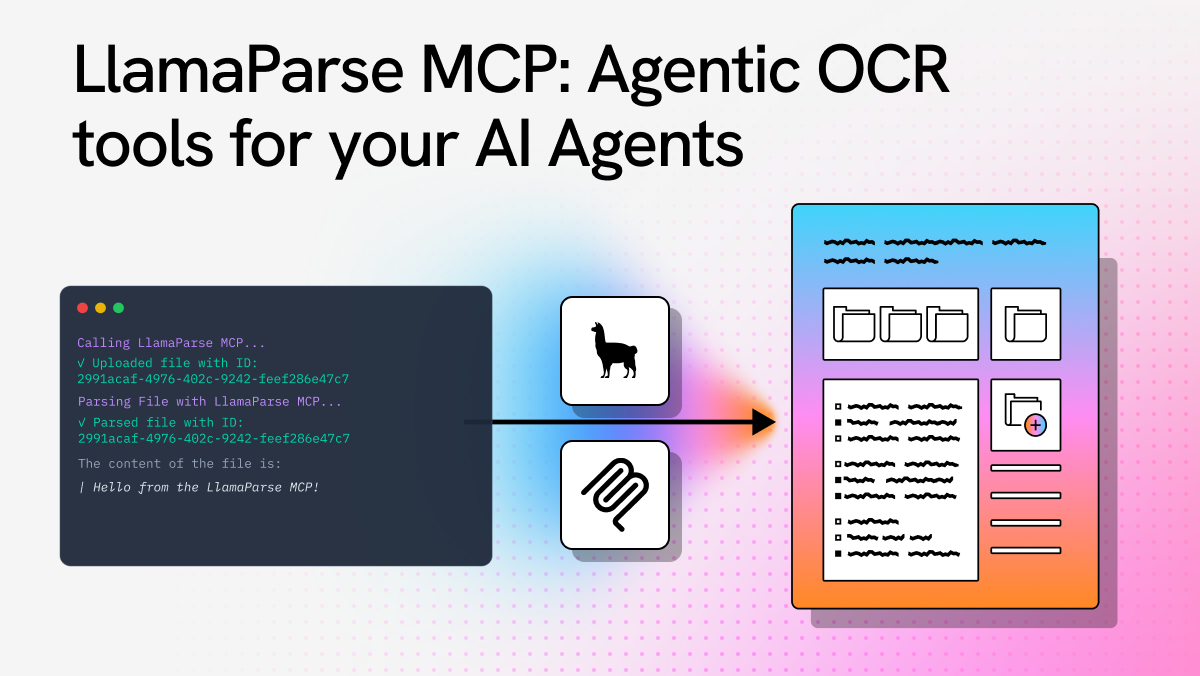
LlamaParse MCP: Agentic OCR tools for your AI agents
We refactored the LlamaParse MCP around agentic document processing — Parse, Classify, and Split. Here's a guide on how how to connect Claude, Cursor, or Copilot in under a minute to give your agent the ability to read complex documents.
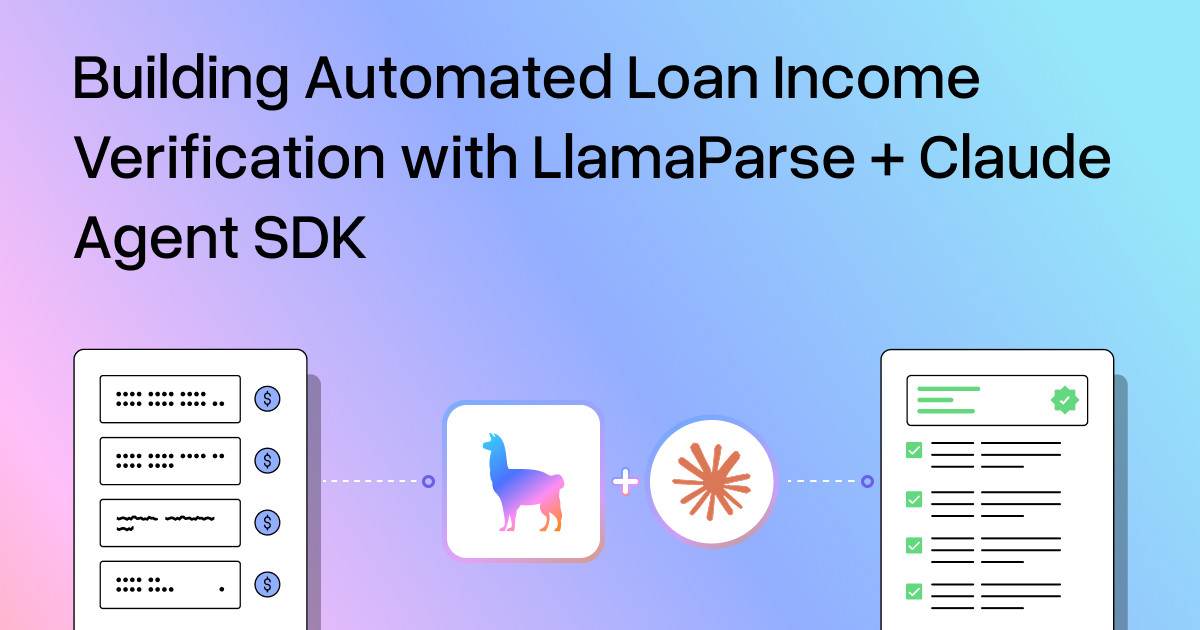
Build Automated Loan Income Verification with LlamaParse + Claude Agent SDK
A working pipeline for mortgage income verification: LlamaParse Extract pulls structured data from the 1003, W-2, pay stub, and bank statement, then Claude cross-validates it for income consistency, employer name matching, and deposit patterns. Same pattern works for insurance claims, contract review, and any document-heavy workflow where the real work is reconciling numbers across sources.
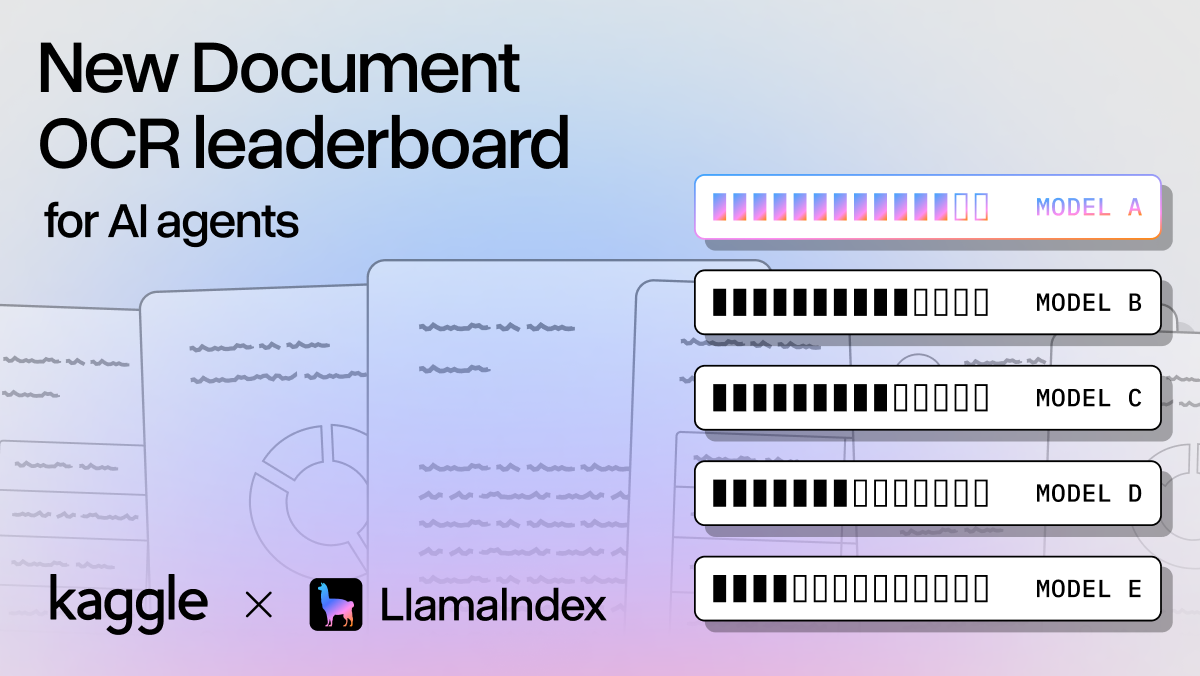
LlamaIndex and Kaggle launch a new Document OCR leaderboard for AI agents
LlamaIndex and Kaggle have launched ParseBench, a new leaderboard and benchmark for evaluating document parsers, OCR systems, and agentic document understanding on messy, high-stakes enterprise files. Built on ~2,000 human-verified pages and 167,000+ test rules, ParseBench helps developers compare models on the tasks that matter most for real-world AI agents, including tables, charts, formatting, faithfulness, and visual grounding.
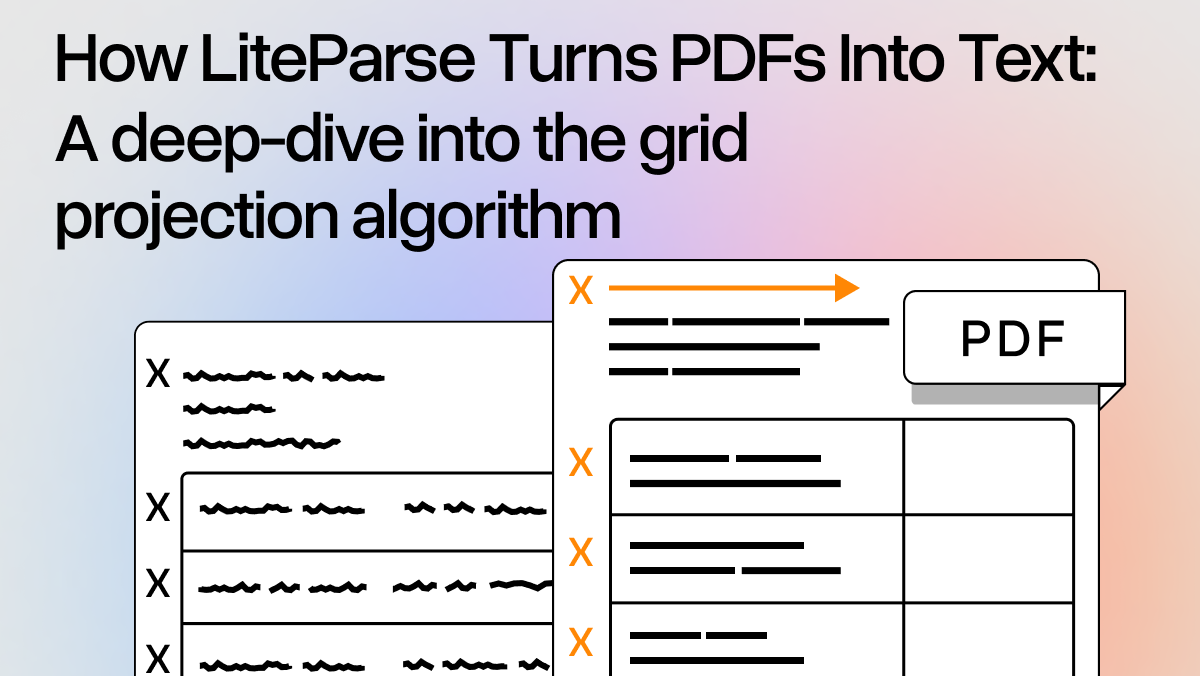
How LiteParse Turns PDFs Into Text: A deep-dive into the grid projection algorithm
PDFs don't store text in reading order — just coordinates and glyphs. That's why extracting clean text while preserving tables, columns, and alignment is so hard. This post walks through LiteParse's grid projection algorithm: how it extracts alignment anchors from recurring X positions, classifies every text item by where it snaps, and projects the result onto a monospace character grid that keeps the document's spatial structure intact.
LlamaIndex Newsletter 2026-04-21
This week: we launched ParseBench, the first document OCR benchmark built for AI agents, with deep-dive videos on three of the five new accuracy metrics (TableRecordMatch, ChartDataPointMatch, and Content Faithfulness). Plus — LiteParse gets its official home on the site after crossing 4.3K GitHub stars, Anthropic Opus 4.7 lands in our benchmark (+42% on charts, mixed elsewhere — LlamaParse Agentic still leads at 84.9%), and we're hosting the AI Builders rooftop at NYC FinTech Week.
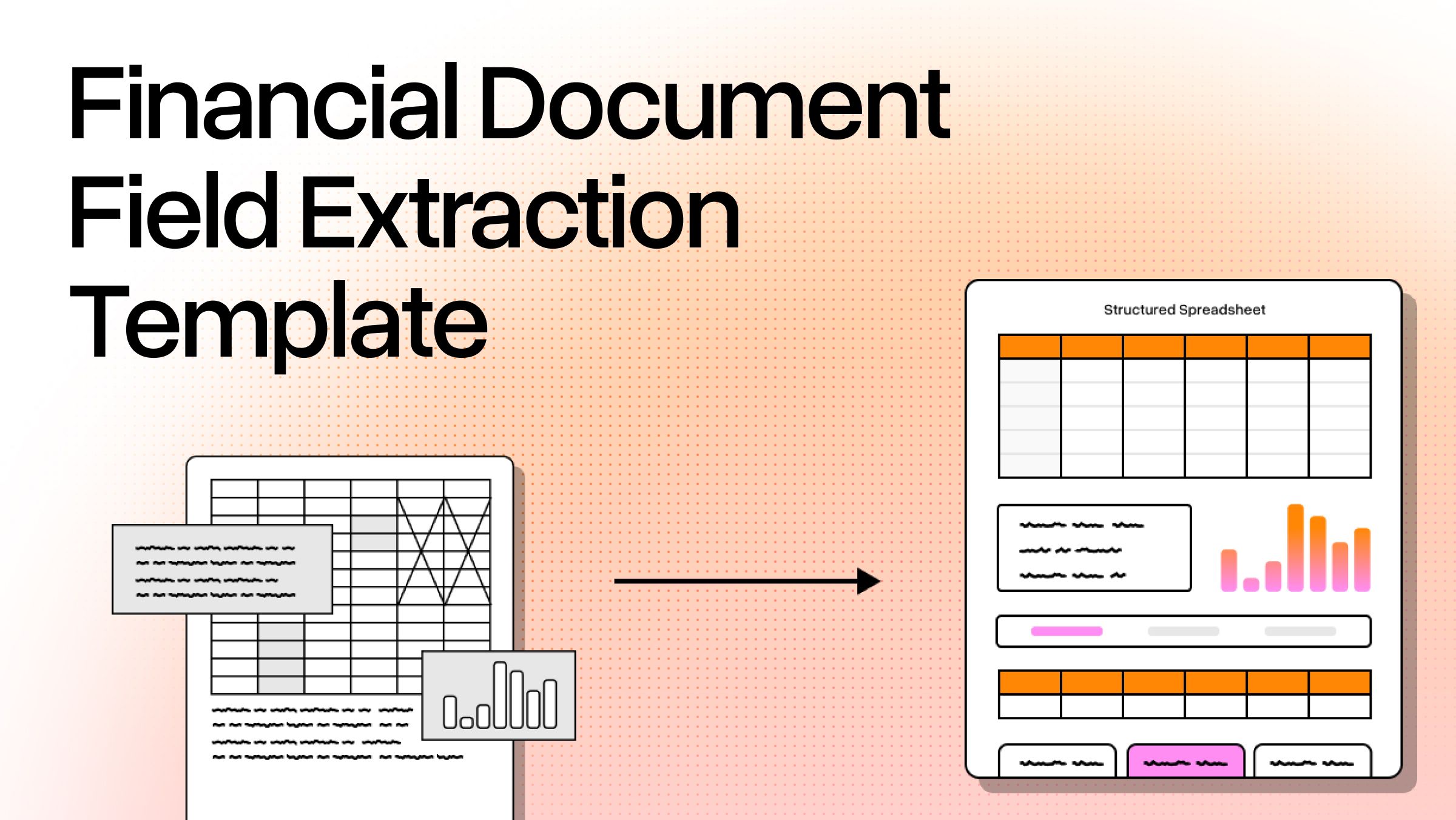
Financial Document Field Extraction Templates: What Most Pipelines Get Wrong
Financial document extraction looks straightforward until the first production invoice arrives in a layout your pipeline has never seen and returns wrong numbers without raising an error. This guide covers what a reliable financial document field extraction template actually requires, where most pipelines get it wrong, and how to build one that holds up in production.
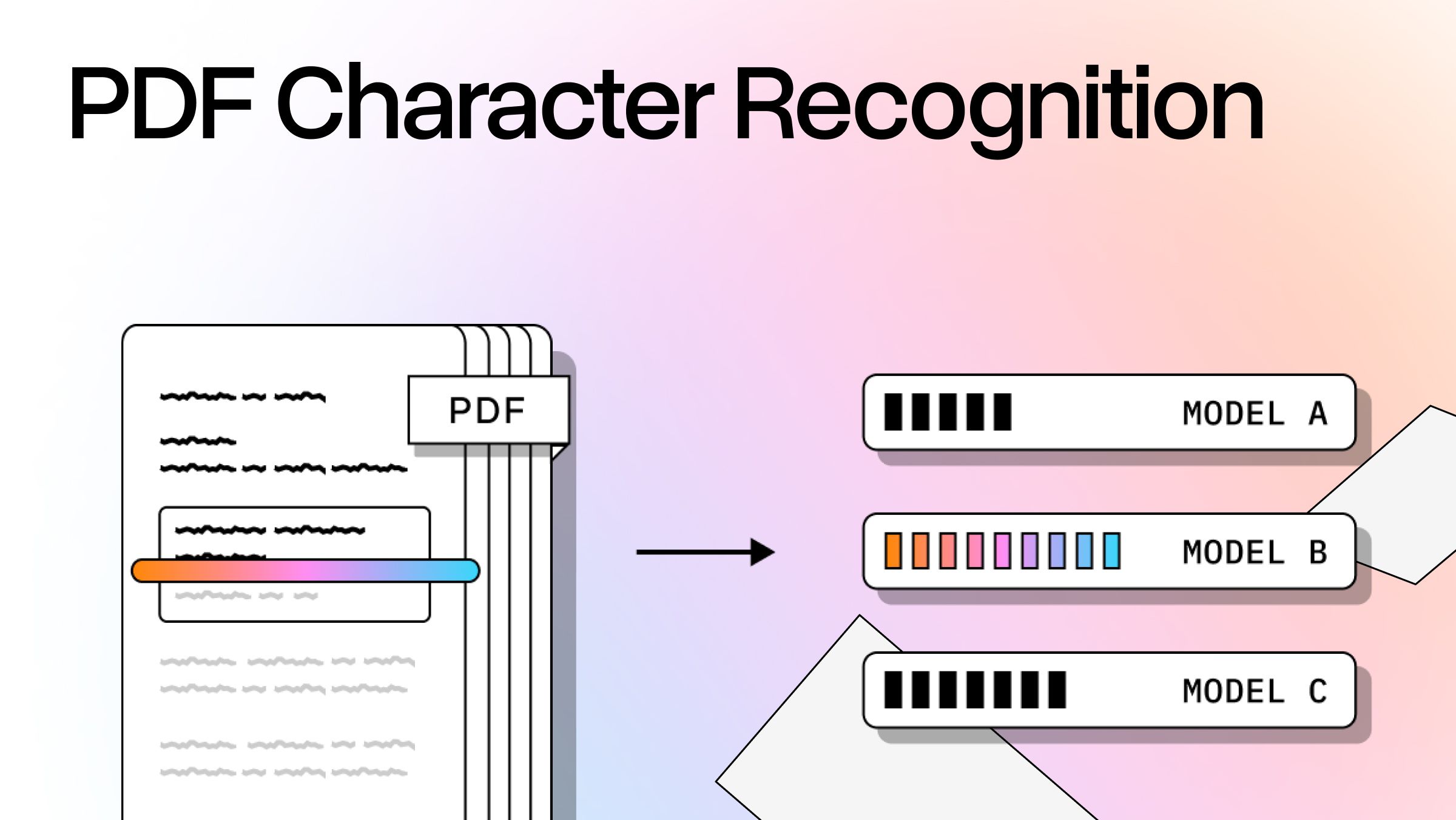
PDF Character Recognition: How OCR Works and Where It Breaks Down
Most PDFs look readable, but if they came from a scanner or camera, the text is just an image. PDF character recognition converts those pixel-based files into machine-readable text, but the gap between recognized text and usable text is where most OCR pipelines break down. This guide covers how it works and where it fails on real documents.
LlamaIndex Newsletter 2026-04-14
This week we're spotlighting ParseBench — the first open-source document OCR benchmark built for the agentic era — alongside LiteParse's explosive growth (4K+ GitHub stars in 3 weeks), a structure-aware PDF QA pipeline with LanceDB, and a new partnership with Auth0 on secure document agents. Plus: two live workshops coming up with Logan on LiteParse (April 28 - virtual) and Jerry on agentic OCR for fintech in NYC (May 13- in-person).
Introducing ParseBench: The First Document Parsing Benchmark for AI Agents
Document parsing is the foundation of every AI agent working with real-world files, yet no benchmark has measured parsing quality the way agents actually need it. ParseBench is a new open-source benchmark of ~2,000 human-verified enterprise document pages with over 167,000 test rules, evaluating parsers across five critical dimensions: tables, charts, content faithfulness, semantic formatting, and visual grounding. After testing 14 methods, LlamaParse Agentic was the only one competitive across all five dimensions, scoring 84.9% overall.
Beyond Raw Text: How LlamaParse and LiteParse Give Agents Real Document Understanding
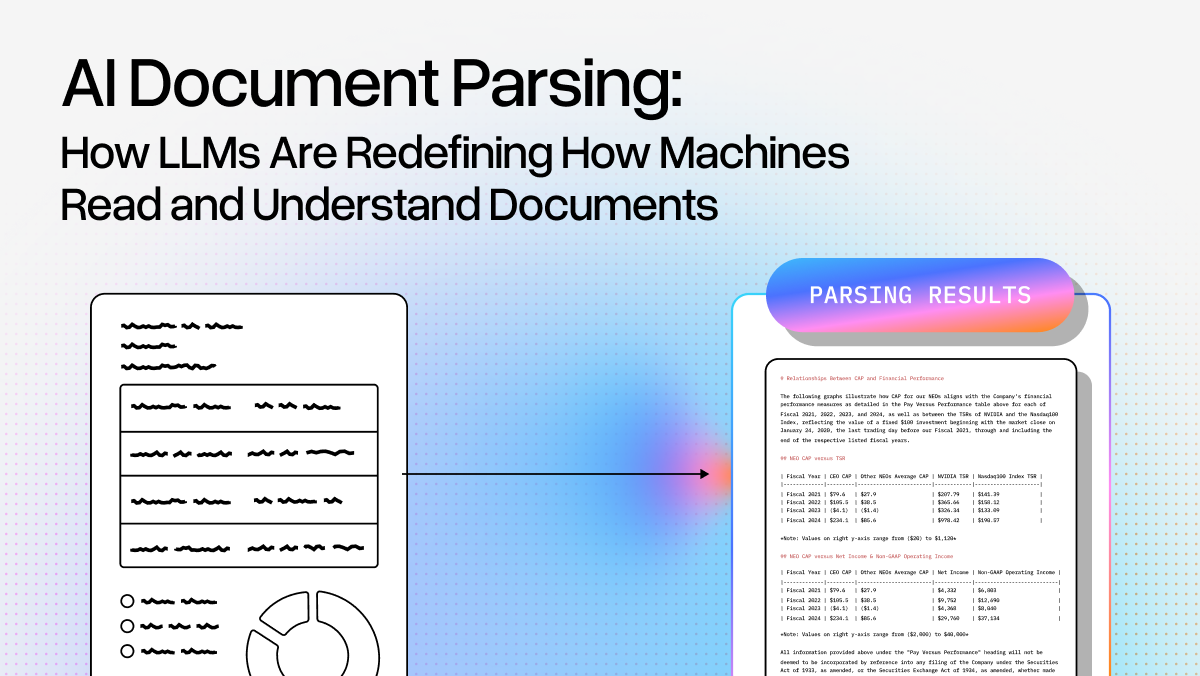
AI agents are only as good as the context they receive — and most document tools feed them garbled text stripped of structure, images, and layout. LlamaParse and LiteParse give agents a structured, semantically rich document understanding layer, turning complex PDFs, spreadsheets, and scans into context agents can actually reason from.
Engineering Insights: Failure Modes That Break VLM-Powered OCR in Production
Lessons from building agentic OCR. This article explore two common failure modes when building AI-powered document ingestion: repetition loops, where models spiral into infinite whitespace output exhausting system resources, and recitation errors, where provider safety filters mistakenly block legitimate document extractions as copyright violations. Both required targeted engineering solutions including streaming detection, dynamic temperature adjustment, and intelligent retry routing
Best Multilingual OCR Software for Global Document Accuracy in 2026
Most OCR software is benchmarked on clean English documents, and accuracy drops meaningfully when you move to other scripts, mixed-language pages, or real-world scan quality. This guide covers what makes multilingual OCR genuinely hard, what to look for in a tool that handles it well, and an honest comparison of the best options in 2026.
Building an OCR Pipeline: Steps to Efficiency
Building an OCR pipeline requires more than running a document through a character recognition engine. Real-world documents introduce layout variability, noisy scans, and mixed formats that break simplified approaches. This guide covers every stage of a production-ready OCR pipeline and how to design one that holds up at scale.
Best OCR Libraries for Developers in 2026
Picking an OCR library in 2026 is harder than it used to be. Traditional engines still work, deep learning models have matured, and LLM-based tools now read documents contextually rather than character by character. This guide cuts through the noise to help you pick the right tool for your document complexity and production architecture.

OCR for Legal Documents: Accuracy & Compliance
Legal documents are among the hardest inputs OCR has to handle, and the consequences of getting it wrong go well beyond a processing error. This guide covers why traditional OCR falls short on legal workflows, where agentic approaches close the gap, and what actually matters when evaluating OCR software for law firms.
Extracting Data From Charts: Step By Step Guide
Charts look simple, but they store data as visual geometry, not text, which means traditional OCR tools can read the labels but miss the actual numbers entirely. This guide covers how to extract data from charts accurately, which method fits your volume and accuracy needs, and where AI fits in.
OCR Document Classification: Building Pipelines That Hold Up in Production
Most document classification failures get blamed on the model. Teams retune, add training data, experiment with architectures, and accuracy barely moves. This guide covers why the extraction layer is usually where the problem originates, and how to build OCR-driven classification pipelines that hold up in production.
LlamaIndex Newsletter 2026-03-31
Intelligent table extraction, LiteSearch for local retrieval, and Word doc parsing breakthroughs.
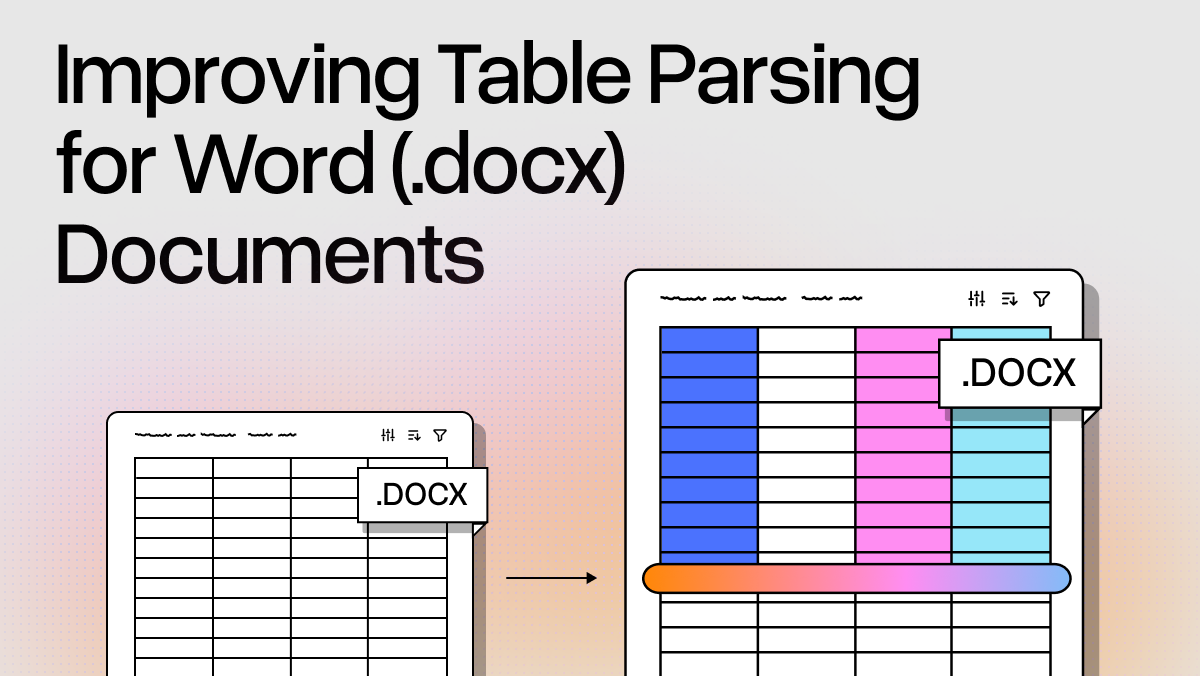
Improving Table Parsing for Word (.docx) Documents
Recent updates to LlamaParse enhance table parsing from Word (.docx) documents by extracting content directly from Word XML, preserving original structure and formatting. This addresses challenges with pagination and complex table formats, allowing for accurate markdown conversion. The improvements particularly benefit tables with rich formatting, merged cells, and nested structures, with plans to extend similar techniques to other structural elements in the future.
LlamaIndex Newsletter 2026-03-24
This week: we open-sourced LiteParse — a lightweight, local document parser built from years of LlamaParse development. Plus, a deep dive into context engineering, new agent skills integration across 40+ agents, visual grounding with bounding boxes, and a smart financial assistant built with Google and Gemini.
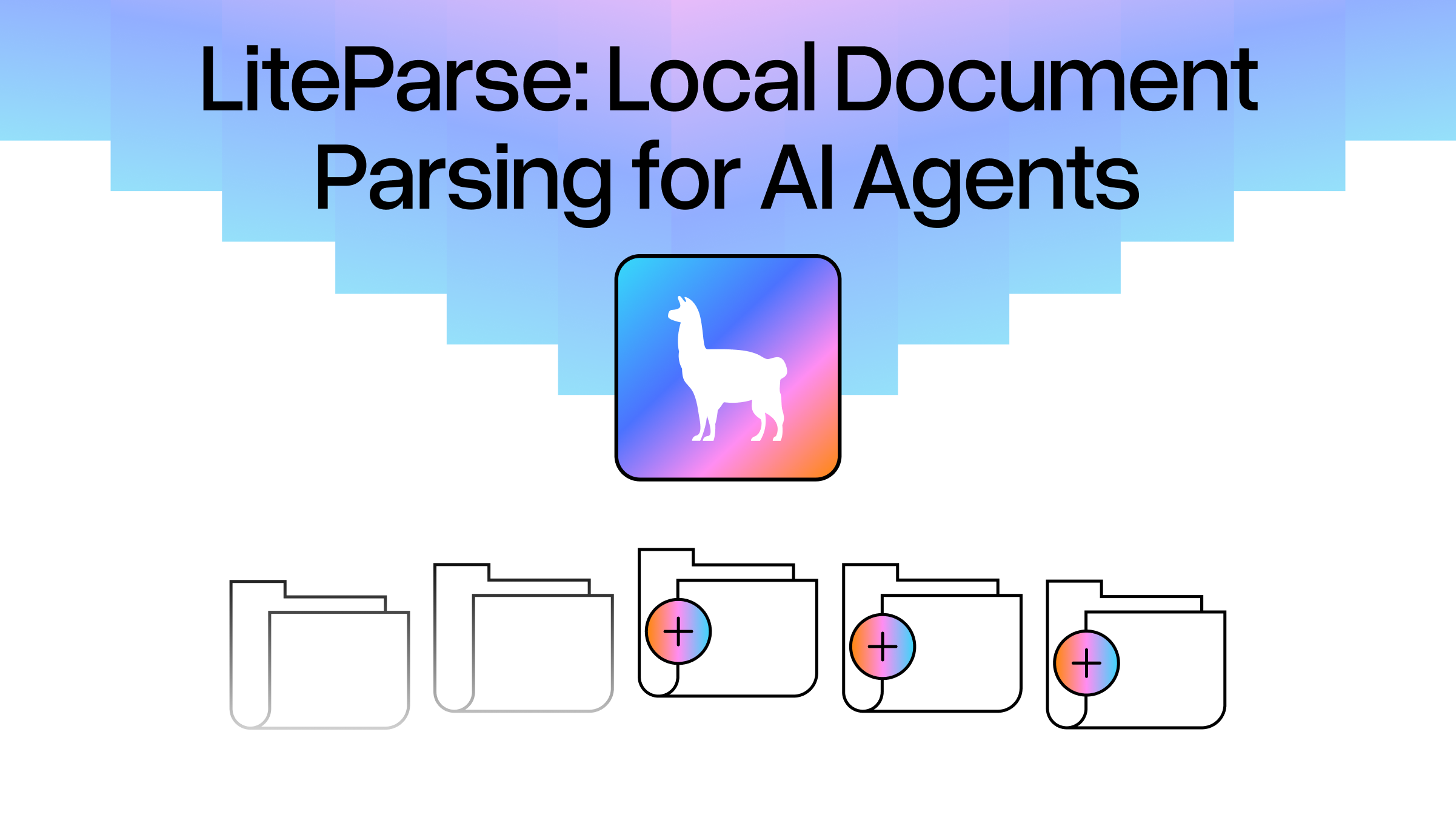
LiteParse: Local Document Parsing for AI Agents
The core processing engine behind LlamaParse is now open source. LiteParse runs entirely locally, has zero Python dependencies, and is built around how agents actually iterate on documents: parse text fast, fall back to screenshots when you need visual reasoning.
LlamaIndex Newsletter 2026-03-17
This week we're announcing the winners of the LlamaAgents Contest, sharing a deep dive into how agentic OCR achieves 90-95%+ straight-through processing rates, and walking through a new demo for building searchable audio knowledge bases with Gemini Embedding 2 and LlamaParse. We also have a major semtools v3.0.0 release and a practical breakdown of when to use Skills vs MCP tools in your agents.

PDFs were never designed to be machine-readable. The format stores drawing instructions for glyph shapes, not actual text — which means tables are just overlapping lines and coordinates, reading order is a guess, and copy-pasting often returns gibberish. Seventy years of OCR have made progress, but "just screenshot it and send it to a VLM" still doesn't cut it at production scale. Here's why parsing PDFs remains a hard problem.
Build a Searchable Audio Knowledge Base with Gemini Embedding 2 and LlamaParse
Gemini Embedding 2 lands with 3072-dimensional vectors and multimodal support — and it slots cleanly into the LlamaIndex stack. To show what's possible, we built audio-kb: a CLI tool that records or ingests audio notes, transcribes them with LlamaParse, embeds them with Gemini Embedding 2, and makes them semantically searchable. The whole pipeline is orchestrated with LlamaIndex Workflows.

LlamaIndex Newsletter 2026-03-10
This week explores why PDF parsing is insanely hard—from glyph shapes with no semantic meaning to tables that don't exist as objects. Join our live webinar March 26th at 9 AM PST where we parse the ugliest documents across every leading model side by side. LlamaIndex has evolved from a RAG framework into a comprehensive agentic document processing platform serving 300k+ users across 50+ formats. New durable agent workflows with DBOS ensure crash recovery without manual checkpoints. LlamaParse launches a Startup Program with free credits and founder access. Plus, chart parsing to pandas DataFrames and Surreal Slides for presentation search.

LlamaIndex is more than a RAG Framework. It is Agentic Document Processing.
LlamaIndex started as a RAG framework. It's evolved into something more focused: best-in-class document infrastructure for agentic work automation. As agent reasoning and coding tools advanced, framework abstractions became less critical. What hasn't changed is the need for accurate document understanding — the vast majority of enterprise knowledge lives in PDFs and spreadsheets, and extracting it reliably remains an unsolved, high-value problem.
Creating a Deal Sourcing Agent with LlamaAgents Builder
LlamaAgents Builder lets you go from a plain-language description to a deployed document processing agent. We walk through building a private equity deal-sourcing agent that classifies deal memos into investment strategies and extracts key financial metrics, all the way from prompt design to a live, testable deployment.

LlamaIndex Newsletter 2026-02-24
This week: LlamaCloud is becoming LlamaParse, LlamaAgents Builder now supports file uploads, last chance to enter the LlamaAgents contest, a Gemini 3.1 Pro receipt analyzer demo, why reasoning models actually hurt document parsing performance, new page-level citations in LlamaExtract, and an upcoming webinar on scaling document ingestion with Stack AI.
OmniDocBench is Saturated, What’s Next for OCR Benchmarks?
OmniDocBench has become the default benchmark for document parsing — but it's getting saturated and its evaluation methodology is too rigid. Top models are hitting 94%+ accuracy, yet real-world document parsing is far from solved. The benchmark is too small, skews heavily toward academic papers, and penalizes parsers for producing semantically correct output that doesn't match exact formatting. We need benchmarks that are more complex, more comprehensive, and evaluate for semantic correctness — not exact match.
The Cost of Overthinking: Why Reasoning Models Fail at Document Parsing
Can more reasoning improve document parsing? We tested GPT-5.2 at four thinking levels on complex documents — tables, formulas, multi-column layouts. The result: reasoning doesn't help. Cost and latency jumped 5–8× while accuracy flatlined at ~0.79. Higher thinking actually caused hallucinations and structural errors. A pipeline-based approach like LlamaParse Agentic outperformed all reasoning levels in quality, speed, and cost.
LlamaIndex Newsletter 2026-02-17
This week explores the future of long-horizon document agents working autonomously on complex tasks, a new PostHog integration for LLM analytics, and an invoice reconciler demo powered by LlamaParse and LlamaParse. Logan Markewich shares thoughts on how LLM-powered coding agents are reshaping open source development.

Beyond Full-Text Extraction: Why Page-Level Granularity Matters
Stop drowning in documents. Start surfacing exactly what matters, down to the page. Page-Level Extraction in LlamaExtract has become one of our most-used features. It fundamentally changes how teams work with complex documents—extracting structured data using custom schemas while preserving the page-by-page granularity that makes insights actionable, auditable, and actually useful.

2026 is the year agents go from workflows to employees. Today's document AI is either constrained batch processing or synchronous chatbots — both bottlenecked by human input. The next step: long-horizon agents with event triggers, persistent task backlogs, and inbox-style interfaces that can autonomously maintain living documents, iterate on PRDs, and manage contract redlines over weeks, not minutes.

On the Incoming Slopocalypse and the Death(?) of Open Source
Coding agents have lowered the barrier to open-source contribution so much that it's no longer an exclusive club. From LLM-generated PRs that lack project context to the declining value of simple utility packages, every pillar of OSS is being reshaped. But open-source isn't dead—it needs to adapt, with hackable reference implementations, community-driven curation, and agent-friendly codebases becoming the new foundations.
LlamaIndex Newsletter 2026-02-10
Join our Document Agent Olympics competition for $200 prizes, register for the AWS AI Builder Lab in San Francisco (Feb 13th), and don't miss our upcoming webinar on February 26th with Stack AI on scaling document ingestion. NTTDATA shares how they scale enterprise AI with LlamaIndex.

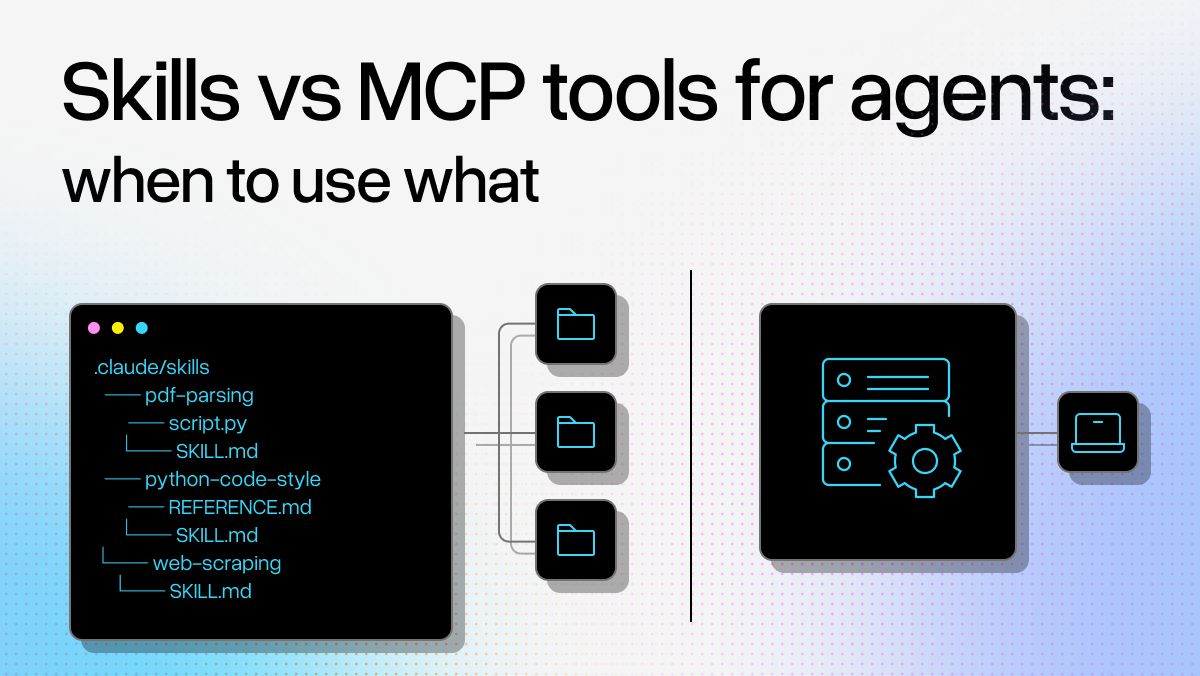
Skills vs MCP tools for agents: when to use what
A somewhat heated debate has been going on recently: whether you should use skills or MCPs to allow your agents to interact with tools or access domain-specific knowledge. While the two options overlap, there are important differences around setup, execution and target audience. Let's explore when to use each.
LlamaIdnex Newsletter 2026-02-03
This week features the launch of LlamaAgents Builder for natural language agent creation, a Private Equity Assistant showcasing complete workflow automation with LlamaParse SDK, and an AI-powered presentation generator combining Claude Agent SDK with LlamaParse. Updates include Semtools v2 with full LlamaParse v2 API migration, a comprehensive tutorial on back-office document processing, and our LlamaSheets webinar recording.
LlamaAgents Builder: Idea To Deployed Agent in Minutes
Introducing the LlamaAgents Builder: describe what you need in natural language, and let us generate the appropriate agent workflow with coding agents. Need to classify financial statements and extract key metrics? Want to split resumes by section and pull structured data? Just explain your workflow, and our agent builder handles the rest.
LlamaIndex Newsletter 2026-01-27
Major updates this week: LlamaParse v2 API launches with new LlamaParse SDKs, fully revamped n8n integrations, and our AI Leader Series featuring Experian's customer support agents. Plus, last chance to register for our January 29th webinar on transforming messy spreadsheets into AI-ready data with LlamaSheets.
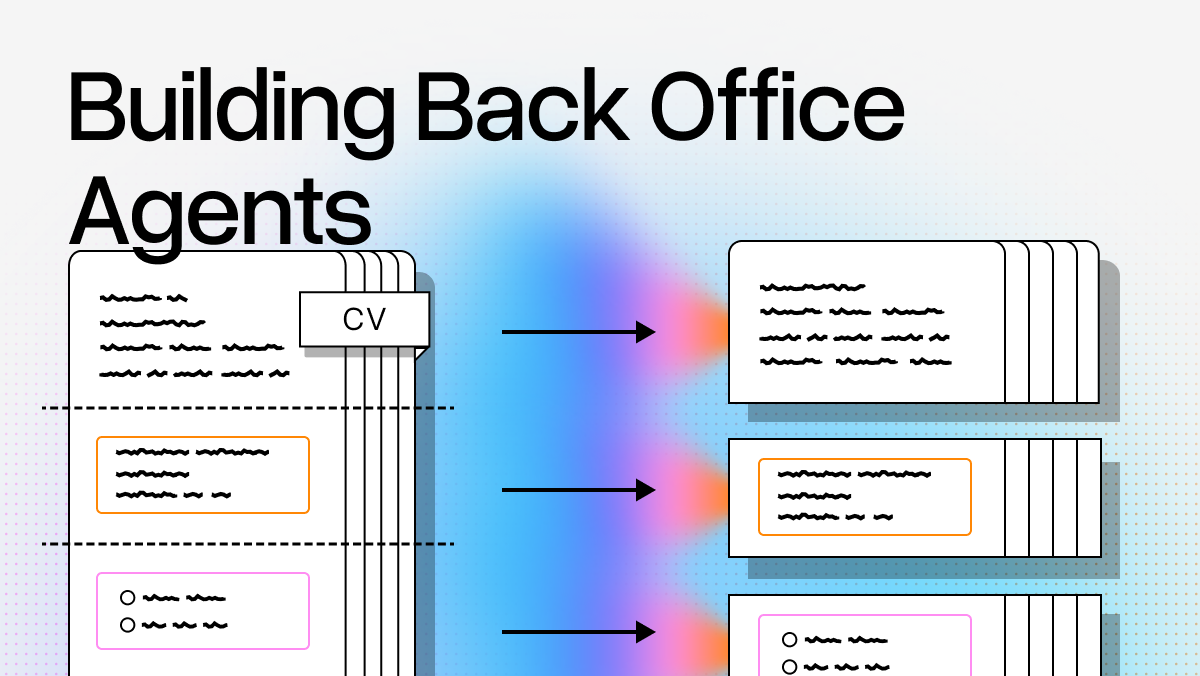
Building Back Office Agents with LlamaParse & LlamaAgents
A lot of admin work is repetitive, multi-step document workflows. Invoice processing, resume screening, contract management. The challenge is that documents are designed by humans, for humans, with fancy layouts and complex structures. This article shows how to build document processing agents that handle real operations workflows using LlamaAgents.
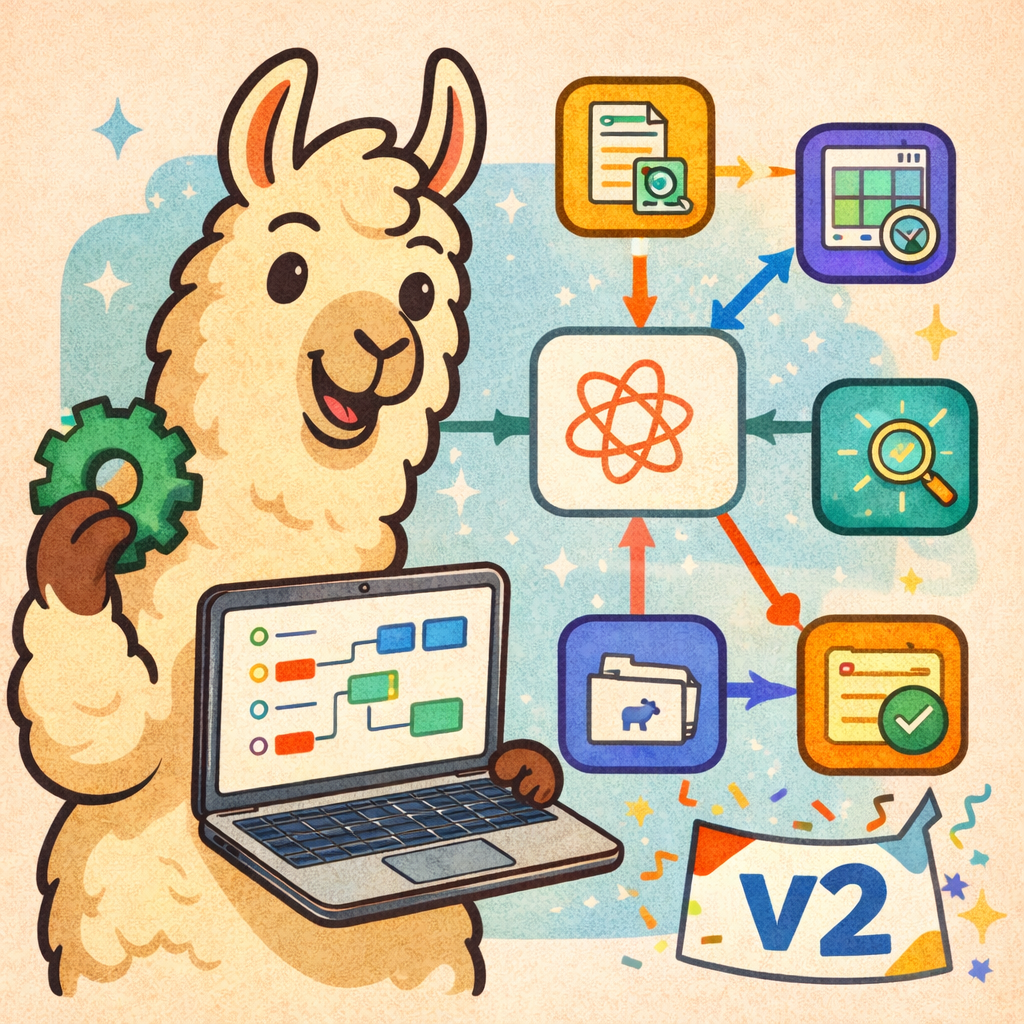
Announcing New LlamaParse SDKs and Parse API v2
LlamaParse v2 is now available through our new API v2 and redesigned llama-cloud SDKs for Python and TypeScript. We've rebuilt the API with structured configuration objects that replace the flat parameter lists of v1, making it easier to find and understand parsing options. Current v1 users can continue using the existing API and SDK without disruption, but we recommend v2 for all new projects.

LlamaIndex Newsletter 2026-01-20
This week celebrates DungeonMaster AI winning our MCP hackathon with autonomous D&D gameplay using specialized agents and 30+ MCP tools. Jerry Liu explores how filesystems are replacing complex tool ecosystems as the primary interface for AI agents. We compare filesystem tools vs vector search, dive into context engineering with memory blocks in Tuana's O'Reilly talk, and showcase Jerry's form-filling agent. LlamaParse's Parse, Extract, and Sheets solve the key challenge of converting non-plaintext documents into agent-ready context. Join our January 29th LlamaSheets webinar!

Agents are converging on files and filesystems as their primary interface for context management. Instead of agents with 100+ MCP tools, we're seeing a shift toward agents with access to ~5-10 core tools and a filesystem. This pattern is emerging across coding agents like Claude Code and Cursor, where files serve three key purposes: storing conversation history, retrieving external context, and teaching agents new skills.

LlamaIndex Newsletter 2026-01-13
This week features exciting developments in document processing and agent workflows. Highlights include vibe-coding document extraction (deploy workflows in under a minute), a new tutorial on intelligent resume processing with LlamaSplit and LlamaExtract, and Jerry Liu's form-filling agent powered by LlamaParse and Opus 4.5. LlamaSheets is in beta—we want your feedback on handling messy spreadsheets with merged cells and broken layouts. Join our January 29th webinar on turning spreadsheets into AI-ready data.

Did Filesystem Tools Kill Vector Search?
Letting LLMs explore filesystems with simple tools can outperform RAG on small datasets by reducing context loss and improving answer quality. In experiments, file-based agents were slower but more accurate than RAG when working with a few full papers. At larger scales, RAG proved faster and more reliable, making the trade-off largely about dataset size and latency needs.
LlamaIndex Newsletter 2026-01-06
Welcome to 2026! Join Logan Markewich's first webinar: Turn Messy Spreadsheets into Structured Parquet Files with LlamaSheets. This week features Agent Workflows with ACP integration (filesystem tools, MCP servers, persistent memory), pre-built document agent templates for instant deployment, and vibe-coding document extraction. LlamaSheets is in beta—we want your feedback on handling merged cells, broken layouts, and complex spreadsheets. Drop feedback in Cloud UI or schedule an in-depth session.

LlamaIndex Newsletter - Looking Back on 2025
Our 2025 Year-End Edition celebrates an incredible year of document AI innovation. Major launches included LlamaAgents for one-click deployment, LlamaParse v2, LlamaSheets for messy spreadsheets, and LlamaSplit for document separation. We shipped Workflow Debugger, and all manner of MCP integrations. The community built amazing projects like open-source NotebookLM alternatives and StudyLlama. Thanks for making 2025 unforgettable—here's to an even better 2026!

LlamaIndex Newsletter 2025-12-23
Happy holidays! Major updates: LlamaParse v2 launches with simplified four-tier configuration and up to 50% cost reduction. Build secure coding agents with virtual filesystem isolation using AgentFS and Claude or OpenAI. LlamaSplit Beta API automatically separates bundled documents with AI-powered classification. See how General Intelligence Company built Cofounder, processing business documents at scale with continuous ingestion. Plus, explore our new filesystem explorer agent powered by Gemini 3 Flash.

Introducing LlamaParse v2: Simpler. Better. Cheaper.
LlamaParse v2 introduces simpler tier-based configuration, stable versions with long-term support, and improved performance at reduced pricing. Instead of complex parsing modes and configs, choose from four tiers—Fast, Cost Effective, Agentic, or Agentic Plus—based on your use case. The Cost Effective tier offers improved accuracy at the same price, while Agentic Plus delivers 50% cost reduction with comparable accuracy. Version pinning ensures production stability while automatic updates deliver continuous improvements.
LlamaIndex Newsletter 2025-12-16
Major updates: LlamaSplit API automatically segments bundled documents with AI-powered classification, enhanced security for coding agents using virtual filesystems, and LlamaSheets for handling complex multi-region spreadsheets. Plus async batch PDF processing for large document collections and new SemTools CLI for agentic document search.

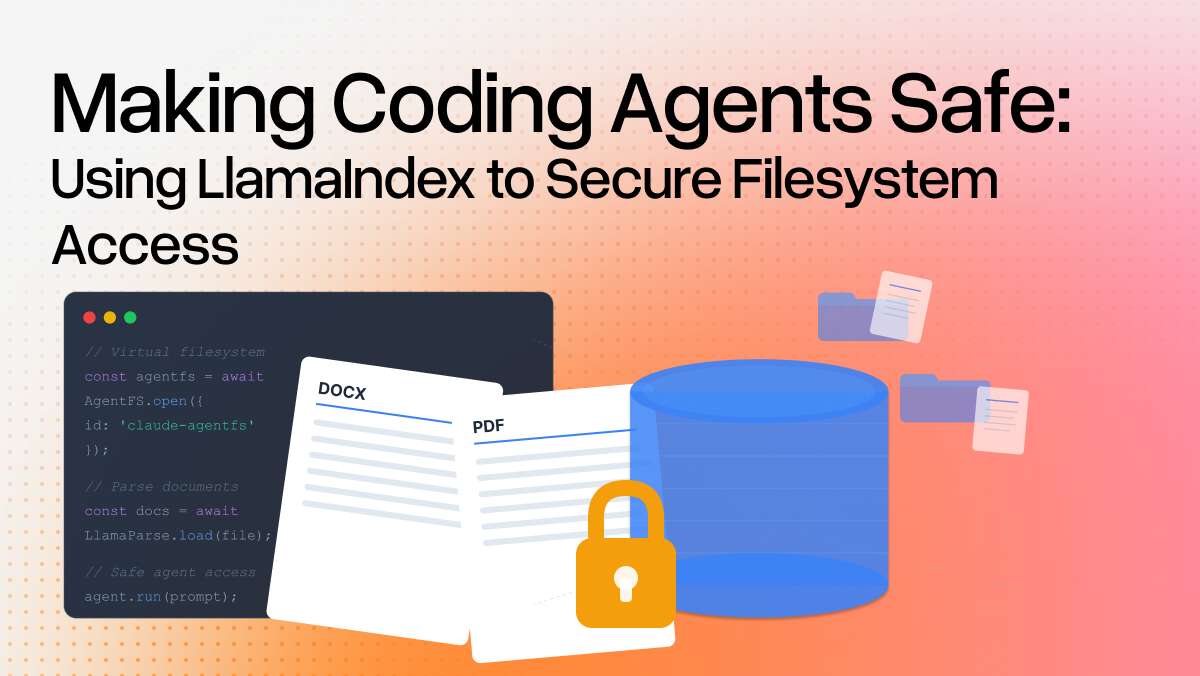
Making Coding Agents Safe: Using LlamaIndex to Secure Filesystem Access
Coding agents need filesystem access, but unrestricted permissions risk accidental deletions and data loss. We built a solution using AgentFS for virtual filesystem isolation and LlamaParse for document understanding, wrapped in LlamaIndex Workflows with Claude Agent SDK. Agents operate freely in a sandboxed copy while your real files stay protected—no constant human oversight needed.
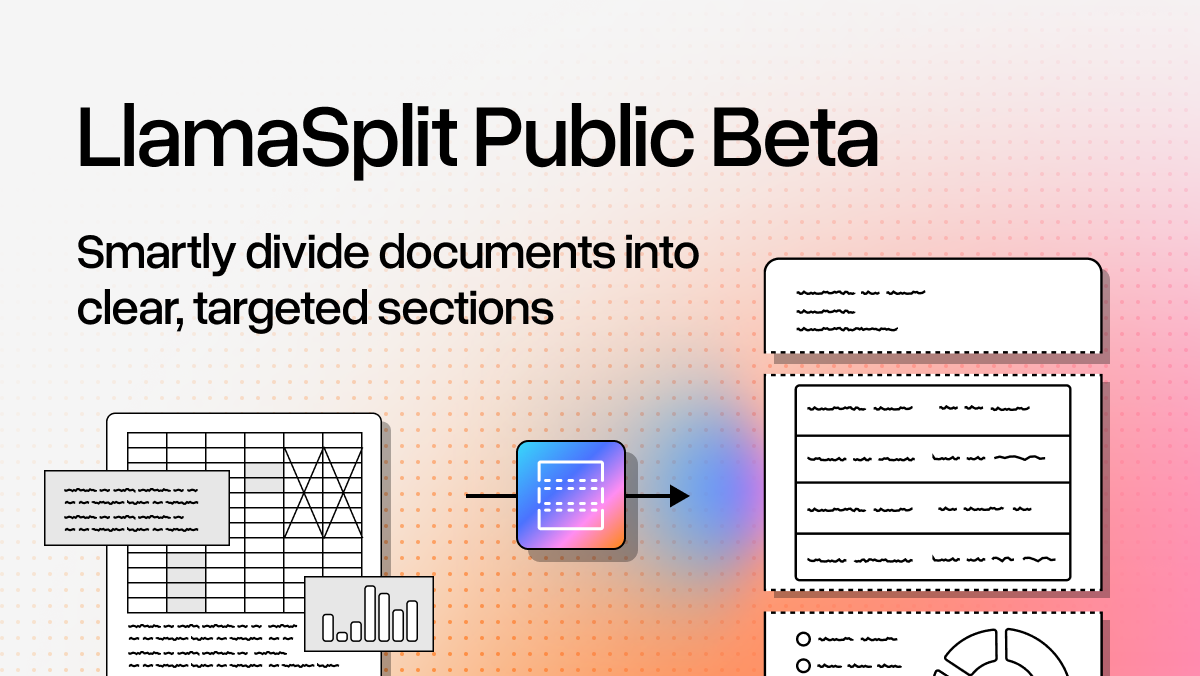
Announcing LlamaSplit Public Beta: Divide Long Document into Clear, Targeted Sections
Introducing LlamaSplit: AI-Powered Document Separation (Beta). Automatically split concatenated documents into distinct sections based on content categories you define
LlamaIndex Newsletter 2025-12-09
Major updates this week: automated spreadsheet analysis with LlamaSheets, async PDF processing for parsing entire folders efficiently, and one-click agent deployment from LlamaParse templates. We're also calling for feedback on LlamaAgents and LlamaSheets—schedule a call with us for a chance to win $50 gift cards. Plus, our deep dive into OCR benchmarking challenges and what next-generation document parsing evaluation should look like.

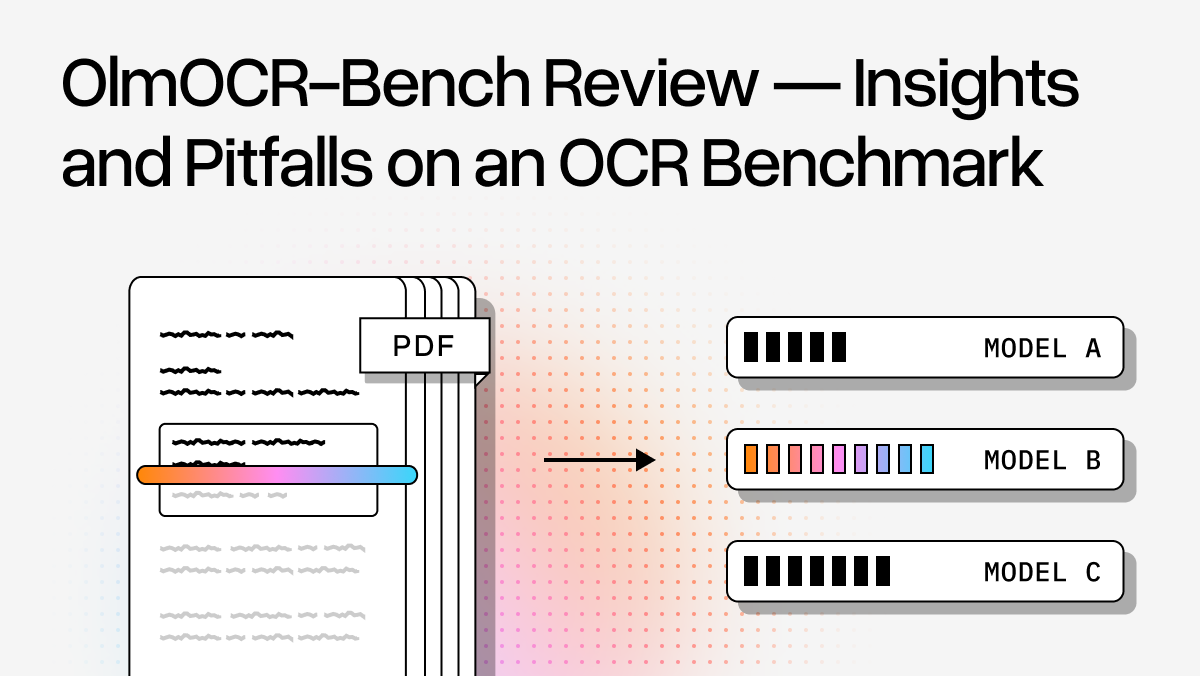
OlmOCR-Bench Review — Insights and Pitfalls on an OCR Benchmark
Document OCR benchmarks like OlmOCR-Bench are pushing the field forward with 7,000+ binary unit tests across diverse PDFs. But gaps remain: real-world documents like invoices, forms, and financial statements are underrepresented, and tests for tables and reading order are still too coarse. We're sharing what makes a strong benchmark and how to build custom test suites for your specific use cases.
LlamaIndex Newsletter 2025-12-02
We've launched LlamaAgents and LlamaSheets over the last few weeks and want your feedback. Fill out our call for feedback forms for a chance to win $50 gift cards. Join us December 4th for a webinar on AI agent document parsing (9AM PT) and office hours for LlamaAgents/LlamaSheets in Discord (11AM PT). Plus, new tutorials on building coding agents with LlamaSheets.

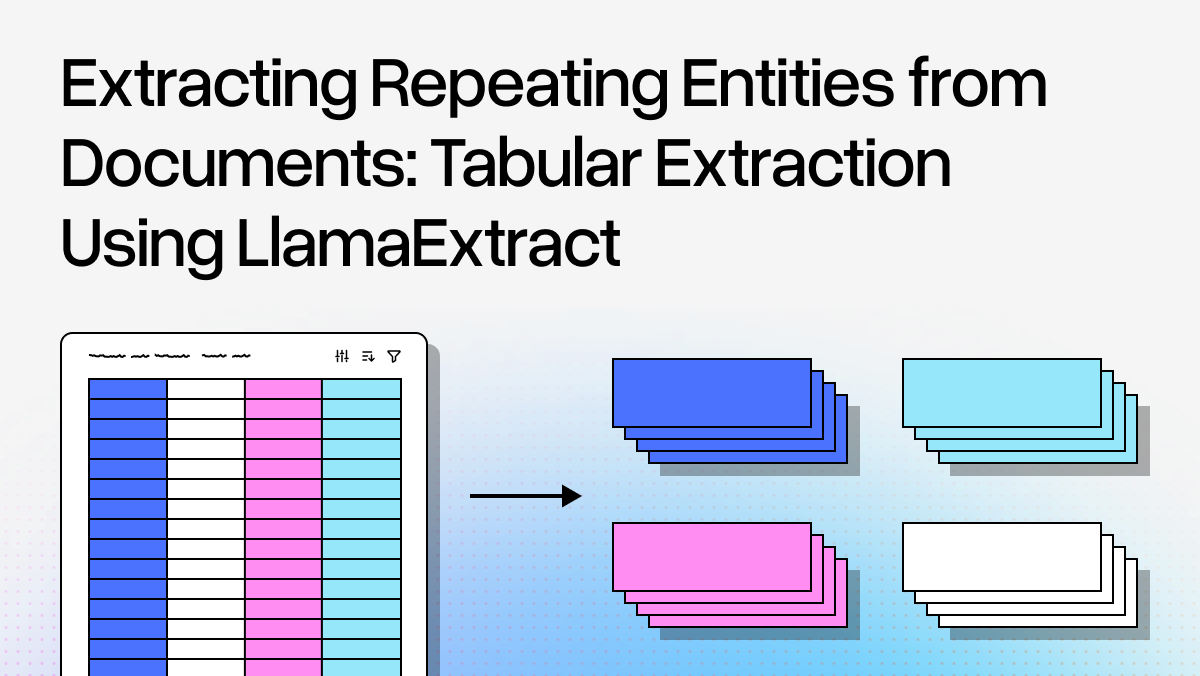
Extracting Repeating Entities from Documents: Tabular Extraction Using LlamaExtract
LLMs struggle with exhaustive extraction from long lists. Our new PER_TABLE_ROW extraction target solves this by intelligently segmenting documents into entity-level chunks instead of treating everything as one monolithic block. Extract hundreds of hospitals from tables, catalog items from PDFs, or any repeating structured data with complete coverage. Works beyond formal tables—any consistent visual pattern qualifies.
LlamaIndex Newsletter 2025-11-25
Major updates this week: LlamaSheets (beta) transforms messy spreadsheets into AI-ready data, extracting structured tables from complex .xlsx files with merged cells and formatting quirks into clean parquet datasets. LlamaAgents launches in open preview with pre-built templates and one-command deployment. Plus, explore our deep dive on LLM-powered document parsing with zero-shot semantic layout reconstruction and self-correcting workflows.

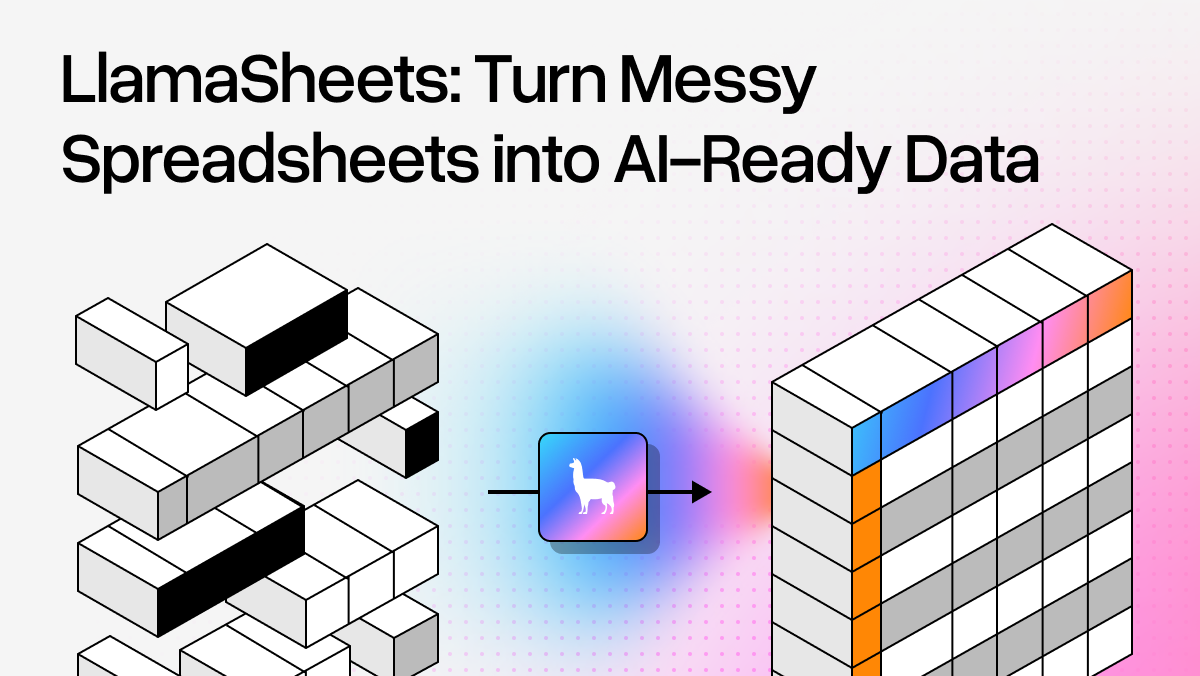
Announcing LlamaSheets: Turn Messy Spreadsheets into AI-Ready Data (Beta)
Now in free beta, LlamaSheets intelligently interprets formatting, layout, and semantic relationships inside .xlsx files to produce clean parquet outputs — including typed tables, metadata, and sheet context. Powered by a multi-stage pipeline for feature extraction, region classification, and hierarchical table reconstruction, it enables automation across finance, reporting, analytics, and agent workflows. Try it via the Playground UI, Python SDK, or REST API today.
Observability in Agentic Document Workflows
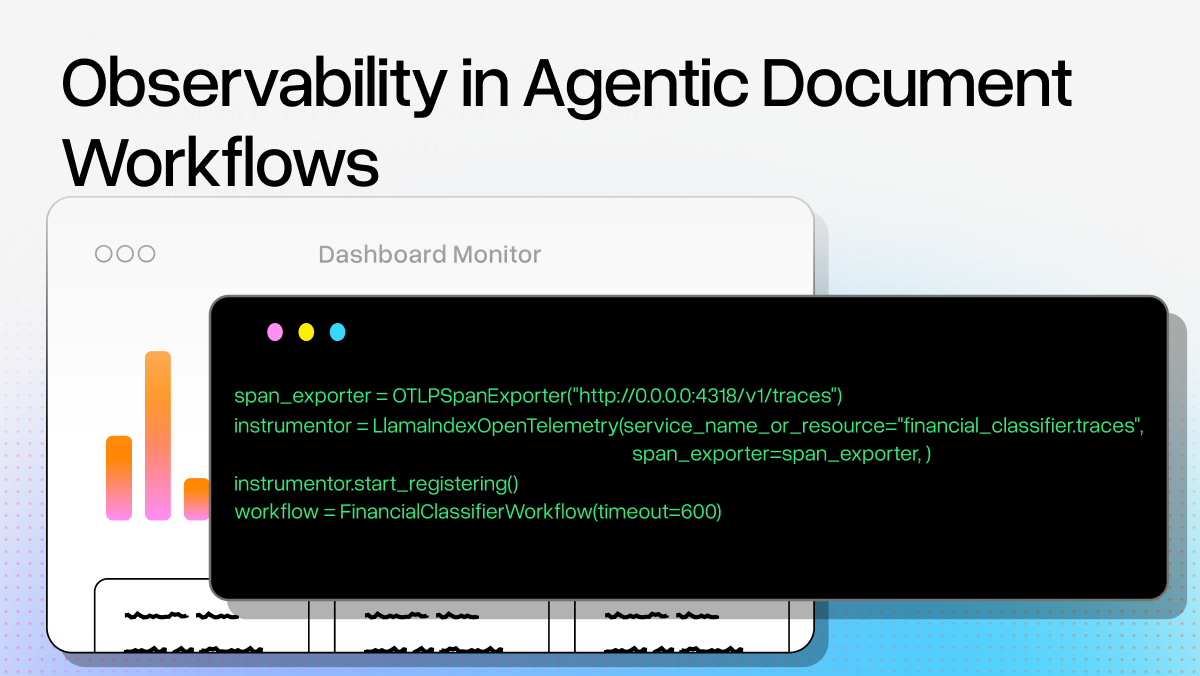
Agentic document workflows (processing invoices, extracting financial data, analyzing contracts) involve multiple AI-driven steps. Without observability, these systems become black boxes that could silently fail at any moment. Learn how to add comprehensive tracing to your document pipelines using LlamaIndex Agent Workflows and OpenTelemetry, tracking how unstructured PDFs transform into structured, actionable data.
Announcing LlamaAgents Open Preview: Build, Serve & Deploy Document Agents
LlamaAgents is now in open preview, focusing on document extraction agents. It combines LlamaParse's document processing with Agent Workflows orchestration—build multi-step workflows and deploy to production with a single command. Get started with llamactl init, choose from templates like SEC Insights or Invoice Extraction, serve locally, then deploy to LlamaParse.

LlamaIndex Newsletter 2025-11-18
Join our December 4th webinar on AI-powered document parsing. New experimental agentic chart parsing extracts precise numerical data from line charts. Pathwork case study shows 8x throughput scaling to 40,000 pages weekly. Explore SEC filings templates, email-triggered workflows, and learn how agentic OCR achieves 90%+ pass-through rates.

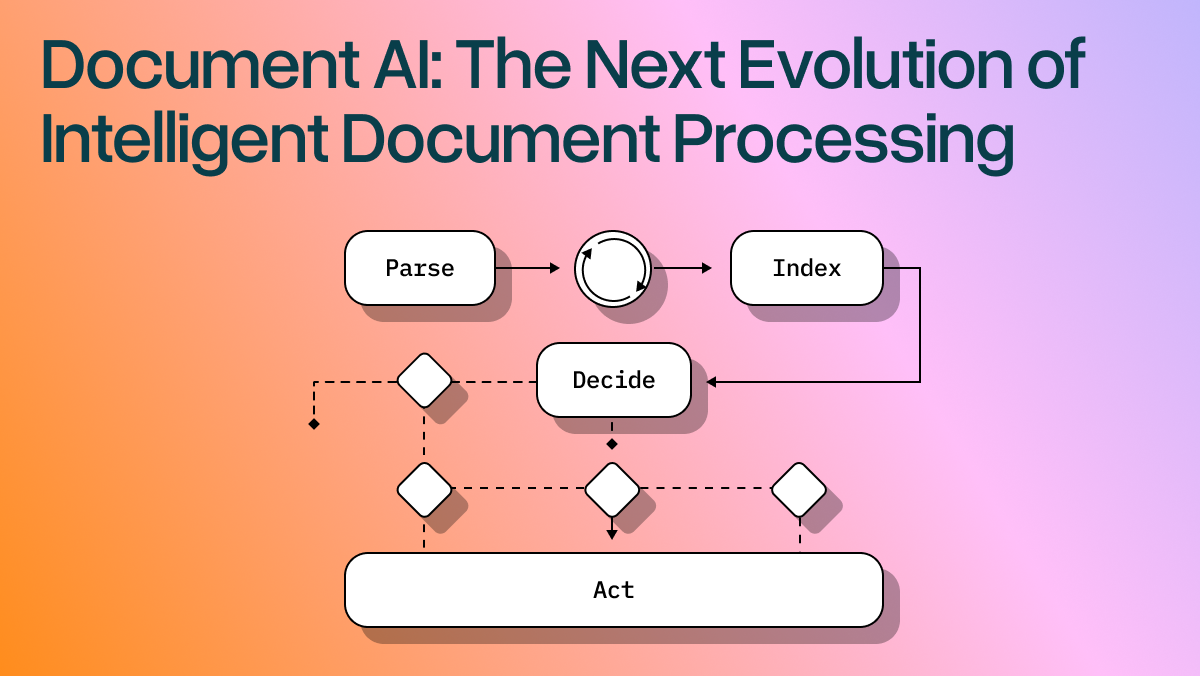
Document AI: The Next Evolution of Intelligent Document Processing
Agentic OCR and LLM-powered workflows are transforming document automation by enabling systems that truly understand layout, context, and semantics, not just extract text. This new class of Document AI dramatically boosts accuracy and pass-through rates while reducing manual effort through adaptive, self-correcting reasoning.
LlamaIndex Newsletter 2025-11-11
Join our December 4th webinar on AI agents for complex document parsing. Watch our MongoDB collaboration on enterprise document processing and explore finance triage agent workflows with LlamaClassify. New email-triggered workflows via Resend integration, plus MavenBio's case study achieving 10x-20x faster workflows. RSVP for our re:Invent Vegas afterparty!

LlamaIndex Newsletter 2025-11-04
This Week's LlamaIndex Highlights: LlamaClassify expands to TypeScript with financial document classification demo. Native MCP search integration now available for documentation access. Watch our vibe-coding demo on agent deployment with Claude Code, catch our MongoDB webinar replay on document processing, and join us at Fully Connected London Nov 4-5.Retry

Adding Native MCP to LlamaIndex Docs
Native MCP search now available for LlamaIndex documentation, offering three tools: search_docs, grep_docs, and read_doc. Accessible at developers.llamaindex.ai/mcp, it integrates easily with LlamaIndex agents, Claude Code, and other platforms supporting MCP.

LlamaIndex Newsletter 2025-10-28
This Week's LlamaIndex Highlights: Recognized by TechCrunch as a top AI company! Explore DeepSeek's 10x vision compression, build text-to-SQL with Arctic models, and deploy anomaly detection workflows. New LlamaClassify TypeScript SDK and AWS Bedrock integration available. Join our Thursday MongoDB webinar and meet us at Money2020 Vegas.

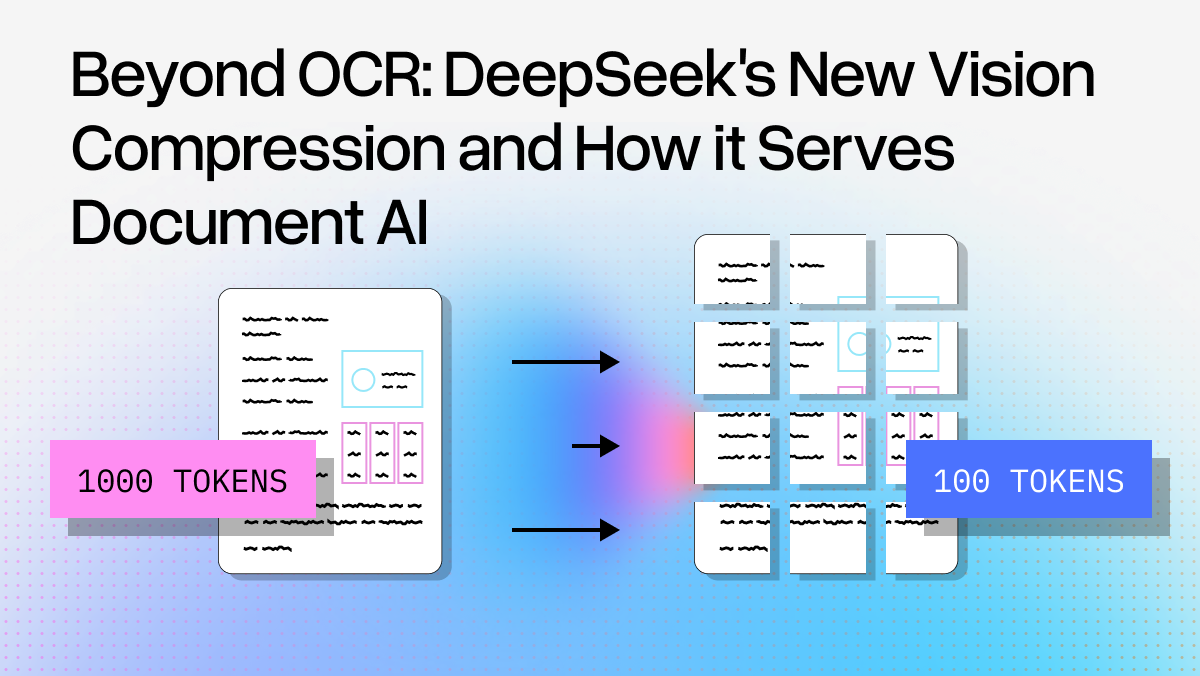
Beyond OCR: DeepSeek's New Vision Compression and How it Serves Document AI
DeepSeek-OCR goes beyond just OCR, using vision as a compression algorithm for text. The model can compress 1,000 text tokens into just 100 vision tokens. While not replacing structured parsing for applications needing precise data extraction, it may introduce a new approach to context management. This article explores how this compression technology could work alongside tools like LlamaParse, for more efficient handling of documents in AI applications.
LlamaIndex Newsletter 2025-10-21
This Week's LlamaIndex Updates: Develop and run LlamaAgents locally with llamactl, debug workflows in real-time with our new Workflow Debugger, and transform natural language into SQL queries with advanced text-to-SQL capabilities. Join our upcoming webinar with MongoDB on document processing at scale, explore custom extraction agents for production deployment, and discover microservices orchestration patterns. Plus, learn how AI agents are transforming finance and insurance industries.

LlamaIndex Newsletter 2025-10-14
This Week's LlamaIndex Highlights: Explore the fundamentals of parsing vs. extraction for document processing, integrate the compact EmbeddingGemma model for on-device RAG, and discover LlamaClassify for intelligent document categorization. Plus, deploy production-ready agents with one-click templates, leverage Claude Sonnet 4.5 in LlamaParse for enhanced document understanding, and build agentic workflows for technical document analysis. Whether you're processing invoices, analyzing contracts, or extracting structured data, this week's updates bring powerful new capabilities to your LlamaIndex toolkit.

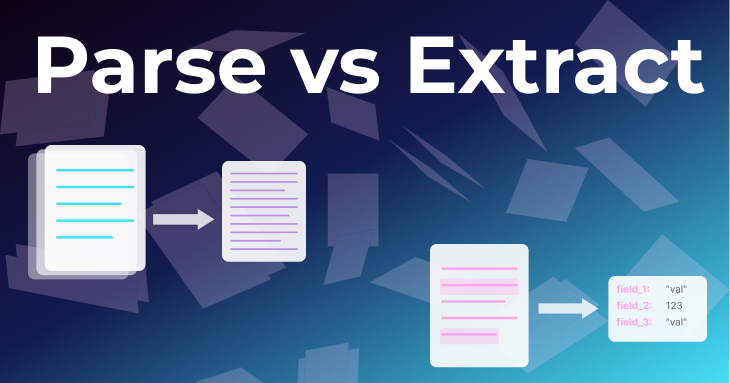
Parse vs Extract: Understanding Two Fundamental Approaches to Document Processing
Understand the fundamental difference between parsing (transforming documents for AI consumption while preserving context) and extraction (pulling specific data into structured formats). Learn when to use each approach and how they complement each other in effective document processing systems.
LlamaIndex Newsletter 2025-10-07
This week's LlamaIndex newsletter features LlamaAgents early access: deploy document agents with one click using ready-to-use templates for invoice processing, contract review, and claims handling. Plus: full-stack agent template with CopilotKit, TypeScript workflows documentation, Claude Sonnet 4.5 support, SemTools benchmark results, and community contributions.

LlamaIndex Newsletter 2025-09-30
LlamaIndex’s latest newsletter dives into how to embed document understanding into Claude Code, shares a full-stack agent example built with Next.js + Tailwind CSS, and spotlights community highlights from Vector Space Day Berlin.

LlamaIndex Newsletter 2025-09-23
LlamaIndex is excited to share the latest updates and insights in our September 23, 2025 newsletter. Discover new features, community highlights, and valuable resources to enhance your LlamaIndex experience.

Adding Document Understanding to Claude Code
Adding Document Understanding to Claude Code enhances its capabilities by enabling users to extract insights from unstructured data. This integration streamlines workflows and improves efficiency in processing documents across various formats.

LlamaParse One Year Later: The Complete Document Automation Platform
LlamaParse has transformed document automation over the past year, offering users a comprehensive platform that streamlines workflows and enhances productivity. Discover how its innovative features have set a new standard in the industry.
LlamaIndex Newsletter 2025-09-09
The LlamaIndex Newsletter for September 9, 2025, brings you the latest insights and updates in the world of data indexing. Discover key trends, innovative techniques, and expert opinions to enhance your data management strategies.
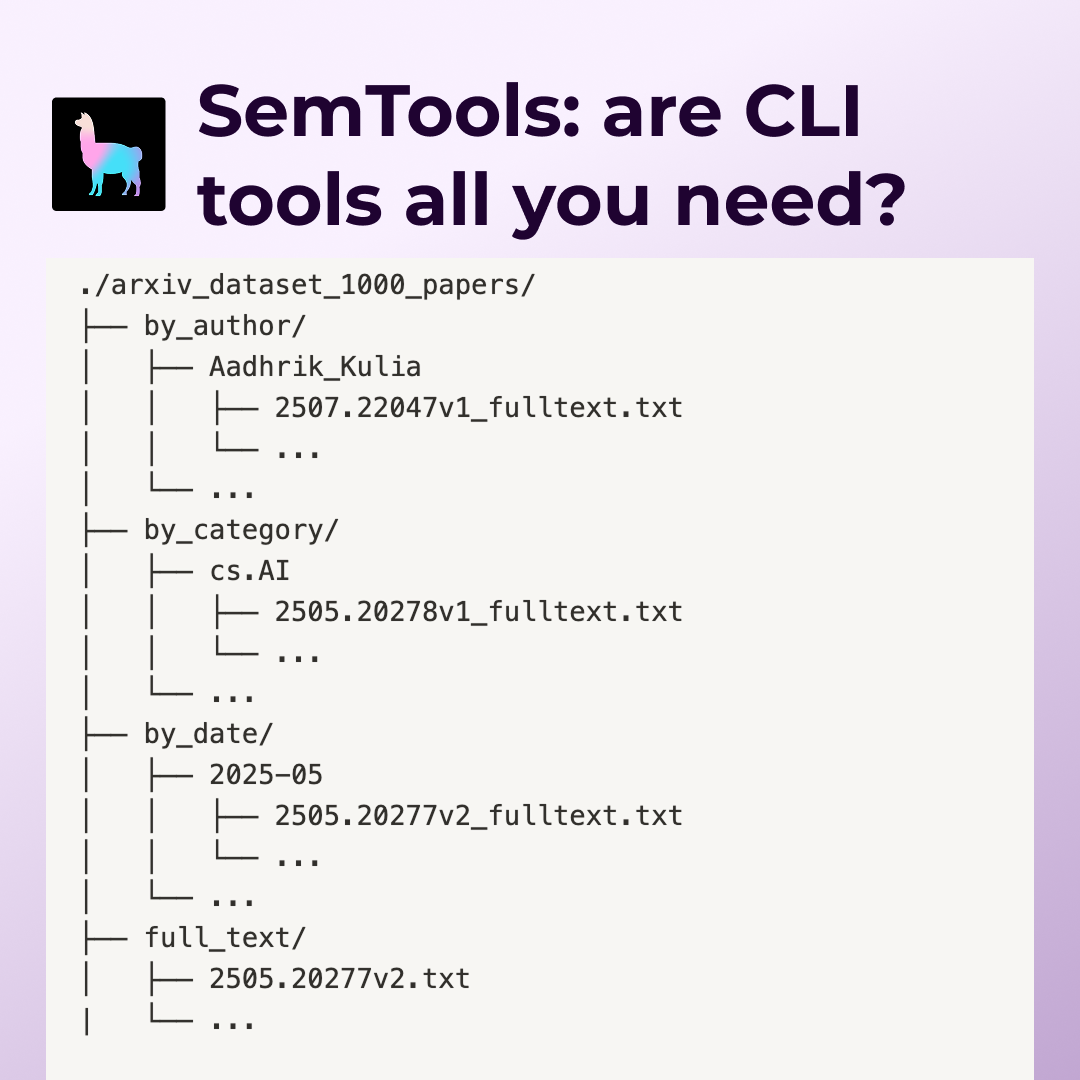
SemTools: Are Coding Agents all you Need?
SemTools explores the evolving role of coding agents in software development, questioning whether they can fully replace traditional coding practices. This post delves into the strengths and limitations of these automated tools, highlighting the importance of human insight in the coding process.
Jeppesen (a Boeing Company) Saves ~2,000 Engineering Hours with Unified Chat Framework
Jeppesen, a Boeing Company, has successfully streamlined its operations by implementing a unified chat framework, resulting in an impressive savings of approximately 2,000 engineering hours. This innovative approach not only enhances communication but also boosts overall productivity across the organization.
LlamaIndex Newsletter 2025-09-02
Discover the latest insights and updates in the LlamaIndex Newsletter for September 2, 2025. Stay informed about key developments and trends that are shaping the future of technology and innovation.

LlamaIndex Newsletter 2025-08-26
Discover the latest insights and updates in the LlamaIndex Newsletter for August 26, 2025. This edition features key trends, expert opinions, and essential resources to keep you informed and engaged.

The Future of Vibe-Coding Agents
The future of vibe-coding agents promises to revolutionize the way we interact with technology by enabling seamless communication and understanding of human emotions. As these advanced AI systems evolve, they will enhance user experiences across various platforms, making our digital interactions more intuitive and engaging.
StackAI Uses LlamaParse to Power High-Accuracy Retrieval for its Enterprise Document Agents
StackAI leverages LlamaParse to enhance its enterprise document agents, achieving high accuracy in information retrieval. This innovative integration empowers businesses to access and manage their documents more efficiently than ever before.
LlamaIndex Newsletter 2025-08-19
Stay updated with the latest insights and developments from LlamaIndex in our August 19, 2025 newsletter. Discover key trends, innovative features, and community highlights that are shaping the future of our platform.
Give AI Agents Web Access with Bright Data and LlamaIndex
Unlock the potential of AI agents by integrating web access through Bright Data and LlamaIndex. This powerful combination enhances data retrieval and processing, enabling smarter and more efficient AI-driven solutions.
LlamaIndex Newsletter 2025-08-12
LlamaIndex Newsletter for August 12, 2025, provides the latest updates and insights from the world of data management and analytics. Discover key trends, expert tips, and innovative solutions to enhance your data-driven strategies.
How SkySQL Enables Smarter Text-to-SQL Agents with LlamaIndex
SkySQL enhances the capabilities of text-to-SQL agents powered by LlamaIndex, enabling them to interpret and execute complex queries more efficiently. This integration streamlines the process of transforming
[...truncated...]